Suggest a translation correctionJoin our volunteer community teamCountries and regions are examples; these languages are also spoken in other places.

Supply Chains

Local opportunity, international trade and resilience.

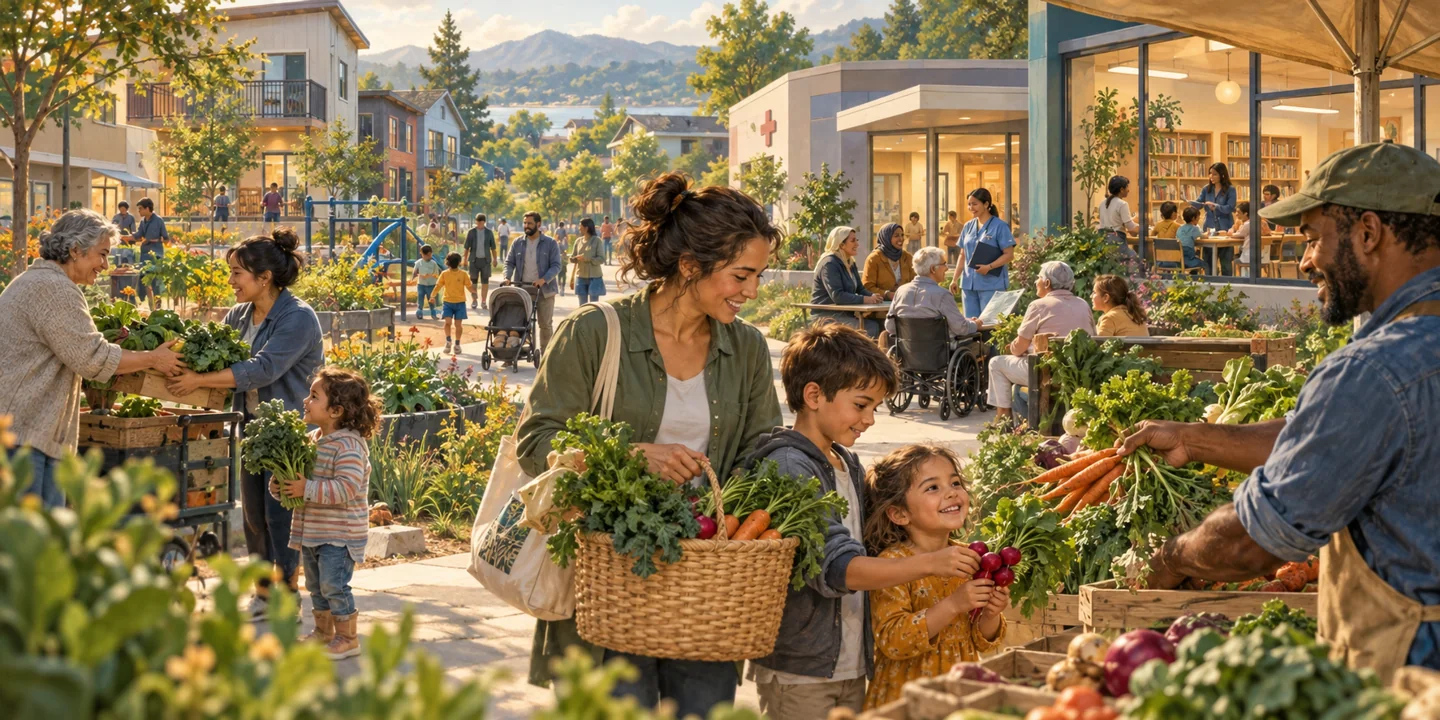
Families and neighbors share food in a community with housing, healthcare and learning spaces.
Basic security gives people more freedom to learn, participate and make choices. AI-created illustration of the topic; not a photograph of an actual event.
Materials and resilience

Why ship a resource around the world and back?

Imagine a town that supplies a valuable raw material but has few opportunities to process or repair the products made from it. Residents ask what would help them build lasting livelihoods. The answer needs to consider local skills, environmental costs and reliable markets together.

A mineral or crop can be extracted in one country, processed elsewhere, assembled in a third place and sold near where it began. That journey can shift jobs and pollution away from the source community while increasing transport and exposure to disruption.

Build more value close to home

Where practical, local or regional refining, manufacturing, maintenance and recycling can create skilled work and keep more value in the community. The World Bank identifies local processing as a way to retain more jobs and value from minerals. World Bank overview.

Communities can strengthen local food, energy, repair and essential services so a distant interruption does not immediately become a local emergency.

Test the whole journey

Local is not automatically cleaner or cheaper. Compare electricity sources, water use, pollution controls, scale, labor conditions, shipping, recycling and the finished product’s lifespan. Some trade remains essential because resources and expertise are unevenly distributed.

Concentrated processing and single-source dependence are real risks; cutting all trade can also weaken resilience. The IEA and OECD examine these trade-offs. IEA · OECD.

A practical aim: make essential supply chains shorter where it truly lowers their total cost to life, diversify unavoidable imports, and retain the capacity to adapt when weather, conflict, disease or infrastructure failure interrupts supply.

Resources, livelihoods and resilience

Keep more useful value near the source

A recurring idea in Michael’s earlier discussions is that communities should have a fair opportunity to process their resources, develop skills and maintain the products they use. A country that exports raw materials and imports finished goods can ask whether investment in refining, manufacturing and repair would improve local livelihoods.

Consider a hypothetical region producing a mineral. One option sends it abroad for processing. Another builds local processing capacity. Compare both pathways from extraction to the product’s end of life: electricity, water, transport, worker safety, pollution, capital cost, customers and recycling. Fewer miles alone do not establish which option is better.

Diversification is more than finding another buyer

Our earlier Canada discussion examined the wider strategy of linking processing, energy, skilled work, transport corridors, ports and several markets. This is a policy direction to assess, rather than a claim that any particular project has already delivered those benefits. The useful questions apply beyond Canada: which dependencies are risky, which capabilities should be retained, and which partnerships make the community more resilient?

A practical comparison before making a commitment

QuestionWhat to compare
Does it improve livelihoods?Stable jobs, training, wages, local ownership and public revenue.
Does it lower total environmental harm?Energy and water use, emissions, habitat effects, transport and end-of-life recovery.
Can it survive disruption?Alternative suppliers, replacement parts, skills, inventories and transport routes.
Who carries the risk?Public subsidies, household prices, debt, land impacts and restoration liabilities.
Can affected people shape the decision?Community participation, rights, transparent contracts and accessible evidence.

Start with essential services people use

A pilot might examine a regional repair network, food-processing facility or recycling partnership before committing to a much larger industrial project. Record the baseline, cost the proposal, publish the results and adjust it. Training, affordability and environmental protection belong in the same assessment.

Explore the World Bank’s minerals overview, the IEA’s critical-minerals outlook and the OECD’s supply-chain resilience review. These sources help examine the options; they do not establish that every local-processing proposal will succeed.
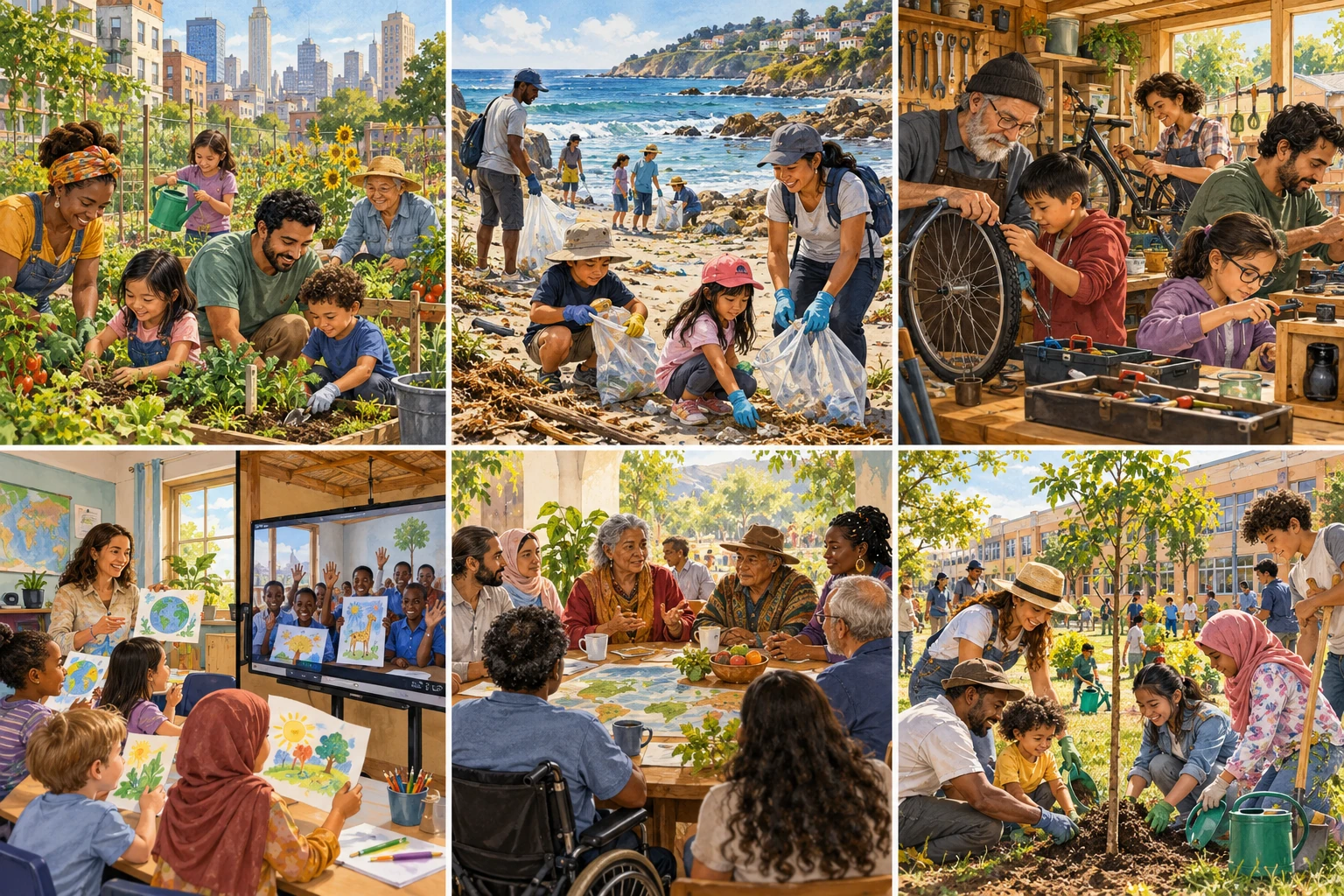
Diverse communities garden, care for a shore, repair useful things, exchange classroom art, listen and plant trees.
Our rooms can care for the house together

Which picture interests you? What could people in your room do together, and what might another room teach you?

AI-created illustration of possible everyday activities around our shared world. Fictional people and settings; not a photograph or a depiction of this country. Select the picture to open a larger view in a new tab.

Beyond fossil fuels: protect people as technology changes

Explore worldwide energy projects and published research, the people behind the oil-to-pump chain, wider community livelihoods and a supported transition. Ask how cleaner technology could give everyone more security, creative freedom and time to enjoy life.

Explore technology, livelihoods and our shared future

Help improve translations. Join our community team.

We warmly welcome help from people who are fluent in the languages used here. These AI-assisted translations may contain mistakes or miss cultural nuances. Your knowledge can help preserve the meaning, tone and intent of the message for readers around the world.

Please send us the page or document, quote the wording that needs attention, and suggest a correction with a brief explanation. A single correction is valuable. You can also volunteer to review more content and become part of our volunteer community team.

If you support Governing for Life’s purpose—improving the well-being of people and the living world—we also welcome volunteer moderators and community mediators. Moderators help apply the participation guidelines fairly. Mediators help keep communication polite and respectful, make room for different viewpoints, and avoid using their role to promote personal opinions. Supporting the purpose does not require agreement with every article or perspective.

Choose the kind of help and the time commitment that suits you. Together, people from different countries, languages and experiences can help this worldwide conversation grow.

Send a correction or express interest in joining the team · Explore volunteer team roles