Equal dignity · Every voice · World peace
Women and Girls Equal Rights and World Peace
Being a woman must never make someone less worthy of freedom, protection, opportunity or participation.
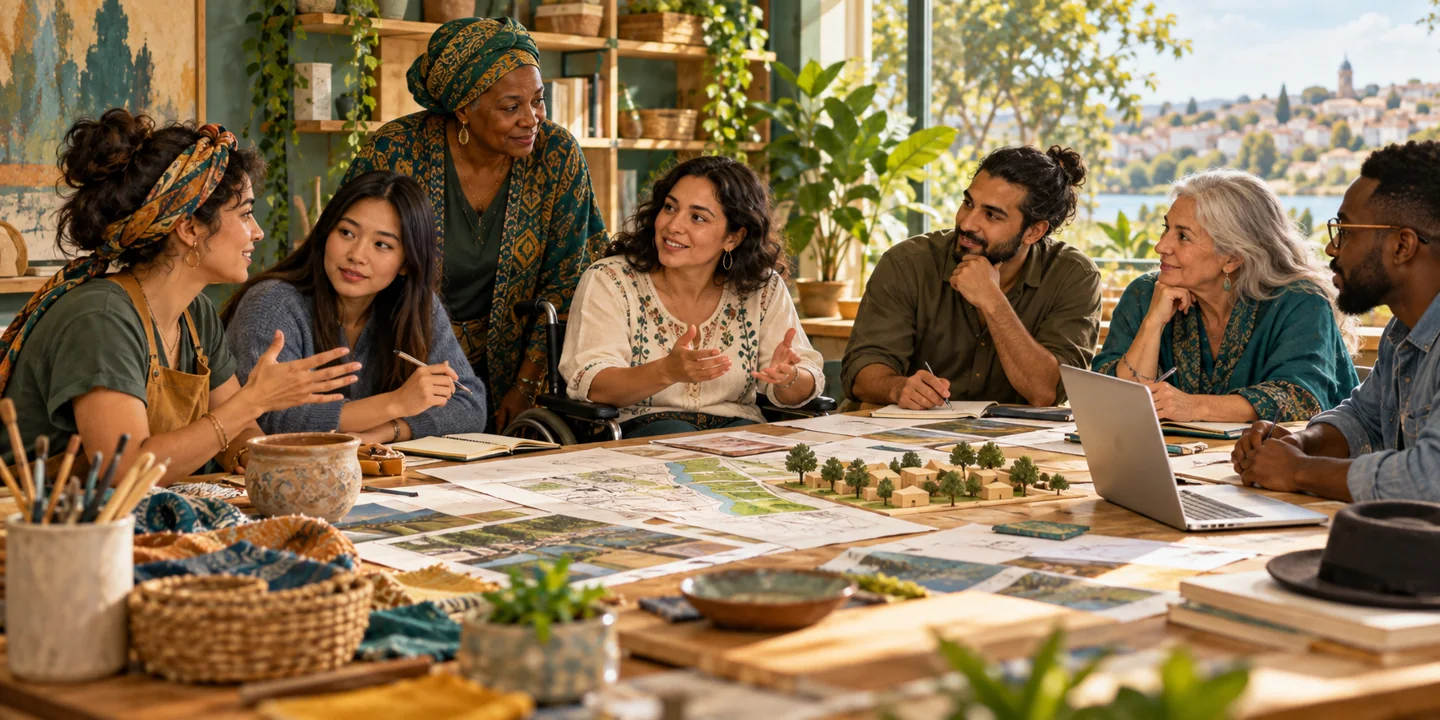
A peaceful world must address what happens within homes, workplaces and communities as well as between countries. Women and girls deserve equal dignity in their own right. Their rights are not conditional on proving their economic usefulness or their contribution to others.
This discussion examines laws, daily experiences and practical changes. It assesses specific arrangements without treating every person in a country, religion or culture as holding the same beliefs. Women affected by a policy should have a central voice in explaining its consequences and shaping responses.
How restrictions enter everyday life
Ask whether a woman or girl can obtain education, move safely, make decisions about her life, receive appropriate health care, own property, control income, participate in public decisions and obtain justice. The answer may differ between written law and daily practice.
Education and freedom to explore
Formal bans, unsafe journeys, unaffordable schooling, discrimination and heavy domestic responsibilities can close opportunities. A child should be able to discover an interest in science, farming, music or another field without being told it is unsuitable because she is a girl.
Income property and economic independence
Restrictions may concern employment, wages, access to finance, ownership or inheritance. Discrimination and inaccessible care services can also limit opportunities even where formal rights exist. Economic dependence may make challenging mistreatment or leaving abuse more difficult.
Marriage consent and bodily autonomy
People must be able to decide freely whether and whom to marry. Forced marriage, sexual coercion and violence undermine that freedom. Decisions concerning health and reproduction should be examined for their effects on consent, dignity, access and equal treatment. Particular legal questions require current information about the jurisdiction concerned.
Safety at home at work and online
Violence, harassment, threats and intimidation can silence participation. Conflict and displacement may expose women and girls to further dangers. Effective protection includes prevention, accessible reporting, care and accountability; the person harmed is not responsible for the perpetrator’s actions.
Care work and time
Cooking, cleaning, raising children and caring for relatives sustain communities. When those responsibilities fall unequally on women without adequate support or choice, time for education, employment, rest and participation can disappear. Sharing responsibility and recognizing care can improve life for everyone. Explore the UN report on care and rights.
Public voice and access to justice
The right to vote is important, but meaningful participation also requires safe opportunities to speak, influence decisions and challenge discrimination. Affordable legal help, accessible institutions and protection from retaliation matter.
Why unequal arrangements persist
Different restrictions have different histories. They may preserve authority, control property and inheritance, maintain economic dependence or enforce expectations about who should lead and who should obey. Political, religious and cultural arguments can be used to justify them; people within those same communities also challenge discrimination.
Tradition explains how a practice may have continued. It does not by itself justify denying someone equal dignity. Claims about the motives of particular officials or institutions need evidence about their actions, decisions and incentives.
Gender discrimination can combine with caste, poverty, disability, ethnicity, migration status or other forms of exclusion. Women do not all face the same conditions, and a single response will not meet every need.
Equal work must not be valued differently because someone is a woman
Being a man is not a reason to receive more pay. If two people perform substantially equal work with comparable responsibilities, experience and hours, a difference based on sex is discrimination. Equality also means examining work of equal value, including different jobs whose skills, effort and responsibilities deserve comparable recognition.
Consider an illustrative example: two employees do the same work, have the same experience and hours, but one receives $25 an hour and the other $20 solely because she is a woman. Calling the man the “breadwinner,” treating her earnings as “extra,” or saying she accepted less does not establish that the difference is fair. These assumptions value gender roles rather than the work.
Why can unequal pay persist?
Gender stereotypes, secrecy about wages, unequal access to promotion, unpaid care responsibilities and the undervaluing of occupations dominated by women can sustain unequal earnings. A practice can become customary without becoming fair. Employers should be able to explain pay decisions using consistent, documented criteria rather than assumptions about a worker’s sex or family role.
Differences based on relevant experience, seniority, responsibilities or measured performance may be justified when applied fairly. The applicable legal tests differ between countries. The question is whether the explanation reflects the job and is consistently applied—or conceals discrimination.
What the evidence does—and does not—show
On 21 September 2026, the International Labour Organization reported that women earn around 18% less than men globally on average. This overall earnings gap does not mean every woman earns 18% less for doing the same job. It also reflects differences in occupations, opportunities, hours, career progression and care responsibilities, alongside discrimination.
In the United States, the Equal Employment Opportunity Commission explains that the Equal Pay Act covers substantially equal work in the same workplace; actual job content matters more than job titles. Compensation includes benefits and bonuses as well as wages. Internationally, the ILO’s equal-remuneration principle addresses work of equal value, a broader comparison than identical job titles.
What could change?
Publish pay ranges and promotion criteria; assess jobs objectively; audit pay and benefits; correct unexplained differences; support shared care responsibilities; and provide accessible complaints procedures with protection against retaliation. Workers and their representatives need a meaningful voice in how these measures operate.
Questions to ask: Are women and men paid equally for equal work? What explains any difference? Are bonuses, pensions and promotion opportunities also fair? Who can investigate safely when the explanation does not withstand scrutiny?
Sources: ILO, 21 September 2026: global earnings gap and its causes; ILO: equal remuneration for work of equal value; EEOC: equal pay and compensation discrimination. Guidance checked 11 October 2026.
Recent examples readers can verify
These source dates and scopes are identified so readers can check the evidence. They are examples, not a complete country ranking or a claim that everyone in the named country supports the practices described.
Afghanistan restrictions on participation
UNAMA briefing dated 8 June 2026: the UN mission again urged the de facto authorities to lift restrictions on women and girls and described the continued exclusion of female national UN staff from UN premises. This is an example of institutional restrictions affecting women’s ability to work and participate.
A UNESCO–UNICEF education report published in 2025 also documents the exclusion of girls from education beyond the primary level. Its figures refer to the period studied, rather than a live count in October 2026.
Read the June 2026 briefing · Read the education findings.
Sudan safety and the need for water
UN Geneva briefing dated 24 July 2026: UN Women reported that women and girls in El Obeid faced drone attacks by day and sexual violence at night when collecting water. It called for protection, humanitarian access and meaningful inclusion of women in peace processes and recovery.
This connects a basic need to security, infrastructure and participation. The briefing reports the agency’s assessment; it is not a finding that every individual allegation has been adjudicated.
Economic rights across the world
World Bank Women Business and the Law 2026: the report examines economic rights and opportunities in 190 economies. It distinguishes legal frameworks, supporting institutions and expert perceptions of enforcement. Its findings show gaps both in written protections and in making them effective.
The scores cover specified economic-rights indicators. They are not a measurement of every human right or a direct count of every enforcement action. Readers can use the report’s profiles and methodology to examine particular economies.
Read the February 2026 findings · Explore the report and methodology.
United Kingdom protection from forced marriage
Current official guidance checked 11 October 2026: the UK provides guidance and support routes for people at risk of forced marriage, including information about protection orders. Such protections illustrate a concrete response to coercion. The exact legal procedures vary by jurisdiction; consult the official guidance rather than assuming one rule applies everywhere.
A legal route’s existence does not show that everyone can access it safely or that abuse has ended.
Women’s organizing can reveal overlooked power
Michael recalls reading about women in an Indian community who challenged mistreatment. In his recollection, men initially said that the situation had always been that way. The women withdrew household labour, and the community’s dependence on sanitation workers helped expose leverage the men had not recognized.
The exact account has not been independently verified. It is included as Michael’s recollection and the question it prompted, not as an established account of a named community. Its point is that essential work and women’s concerns can be overlooked by arrangements that depend on both.
The historical context is documented separately. Human Rights Watch’s 2014 investigation describes certain Dalit communities being compelled into manual scavenging, with women often cleaning dry toilets and men doing sewer or septic-tank work in the communities studied. It also records women organizing to leave this work and facing retaliation. Not all Dalit people perform sanitation work, and the report is historical evidence, not a current national prevalence estimate. Read the investigation.
Caste involves inherited status and exclusion and is not simply another name for economic class. “Untouchable” is a discriminatory designation, never a measure of human worth. India’s Constitution abolishes untouchability in Article 17. This illustrates why legal recognition and lived protection must both be examined. Read the Constitution.
Nonviolent organizing, rights education, worker representation and solidarity can make neglected contributions visible. People facing retaliation also need practical support and protection. This recollection is not advice to confront an abusive person or undertake a particular protest without considering safety.
A documented connection to peacebuilding
The 2011 Nobel Peace Prize recognized Ellen Johnson Sirleaf, Leymah Gbowee and Tawakkol Karman for nonviolent work concerning women’s safety and full participation in peacebuilding. Gbowee’s work in Liberia provides a documented example of women organizing for peace. The historical award recognizes that work; it is not proof that all subsequent problems were resolved. Explore the Nobel account.
What effective change requires
- Review discriminatory rules. Examine education, employment, property, family law, health and participation. Consult the people affected and use current legal sources.
- Make protections usable. Fund accessible services, legal aid, trained institutions and remedies. Evaluate the experience of people seeking help.
- Support economic independence. Address fair wages, safe work, access to finance, ownership and support during life changes.
- Share responsibility for care. Improve childcare, parental leave, elder care and essential infrastructure, alongside fair division of responsibilities within households.
- Keep girls learning. Address fees, transport, safety, accessibility and domestic demands. Make exploration and mentorship available without restricting interests by gender.
- Protect women’s public voice. Address harassment and retaliation and give women meaningful roles in governing, peacebuilding and recovery.
- Check outcomes. Ask who benefited, who remains excluded and what needs correcting. A promise or new law is a starting point, not proof of success.
Men and boys can participate by sharing care, challenging coercion, listening and supporting equal opportunities. People do not have to abandon their cultural identity or adopt a shared spiritual belief to respect another person’s equal rights.
AI can help organize sources, translate information and identify gaps. It must not decide someone’s credibility or rights without accountable review. Inaccurate translation or automated judgments can create further barriers.
Equal rights in our shared house
Restricting women and girls affects their own lives and also the relationships, knowledge and possibilities of their communities. A peaceful society must examine domination within a household as seriously as cooperation between countries.
The aim is equal freedom and protection, with room for different ambitions and ways of living. A woman’s worth does not depend on becoming a leader, a scientist, a parent or an economic contributor. Her voice has value because she is a person.
The UN and equal participation · Education and children · Find family assistance starting points.
Questions people can ask in every country
- Which rights are guaranteed in law, and what prevents women from exercising them?
- Can girls pursue education and interests on equal terms?
- Can women control their income, own property and make informed choices about their lives?
- What support allows someone to leave coercion or violence safely?
- Who carries unpaid care responsibilities, and how could those responsibilities be shared?
- Are women heard in local decisions, budgets and peace processes?
- What has improved, and what evidence shows that the improvement reaches people?
These are starting questions, not claims that every country has the same restrictions. Readers are invited to share verified sources, corrections and perspectives from their communities.
Ask a question Share a perspective or source
Do not post identifying details about someone experiencing abuse. Public contributions are not confidential support channels. For urgent needs, seek appropriate local help rather than waiting for a website reply. Explore assistance routes by country.
Sources checked 11 October 2026. Recent examples retain their report dates; historical examples and Michael’s unverified recollection are labelled separately. We welcome corrections and new evidence.