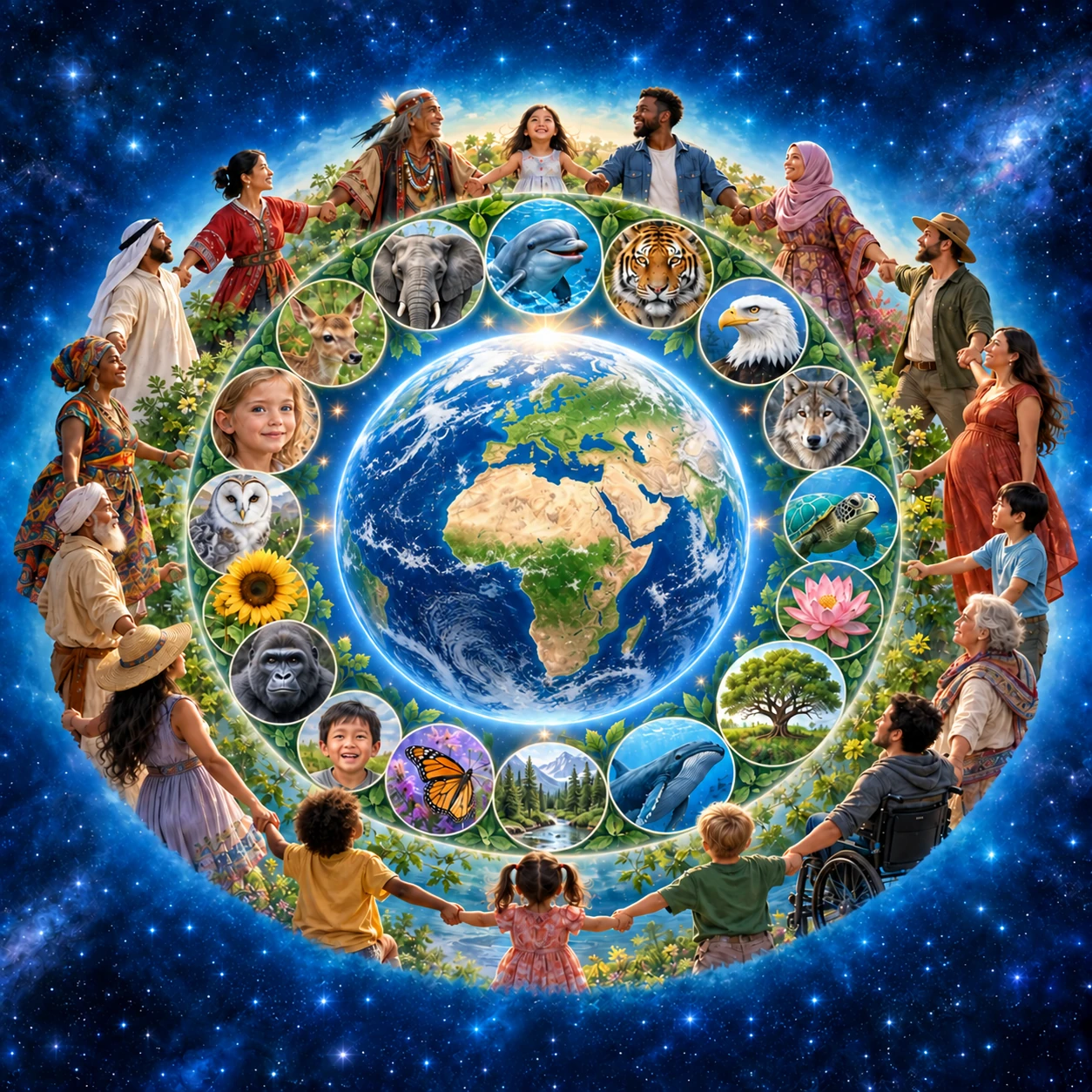

Picture planet Earth as a great house.
Within that house are many homes—the countries of the world. Some are large, others small. Each has its own history, languages, customs and ways of organising life.
Within every country are more rooms: families, communities, schools, farms, businesses, hospitals, governing institutions and the many other places where people live, work and make decisions.
For most of us, daily life takes place in a few familiar rooms. We know our household, our workplace and something of our neighbourhood. We may hear about distant places without knowing much about the people living there.
That is understandable. Earning a living, raising children, caring for someone or dealing with personal difficulties can occupy much of our attention.
Yet the walls between our rooms are not as solid as they appear.
The food on our table, the energy reaching our home, the materials in our belongings and the information on our screens connect us to people and places we may never see.
We already participate in the larger house. The opportunity is to become more aware of how.
The Rooms Inside Each Country
Imagine walking through the rooms of your country.
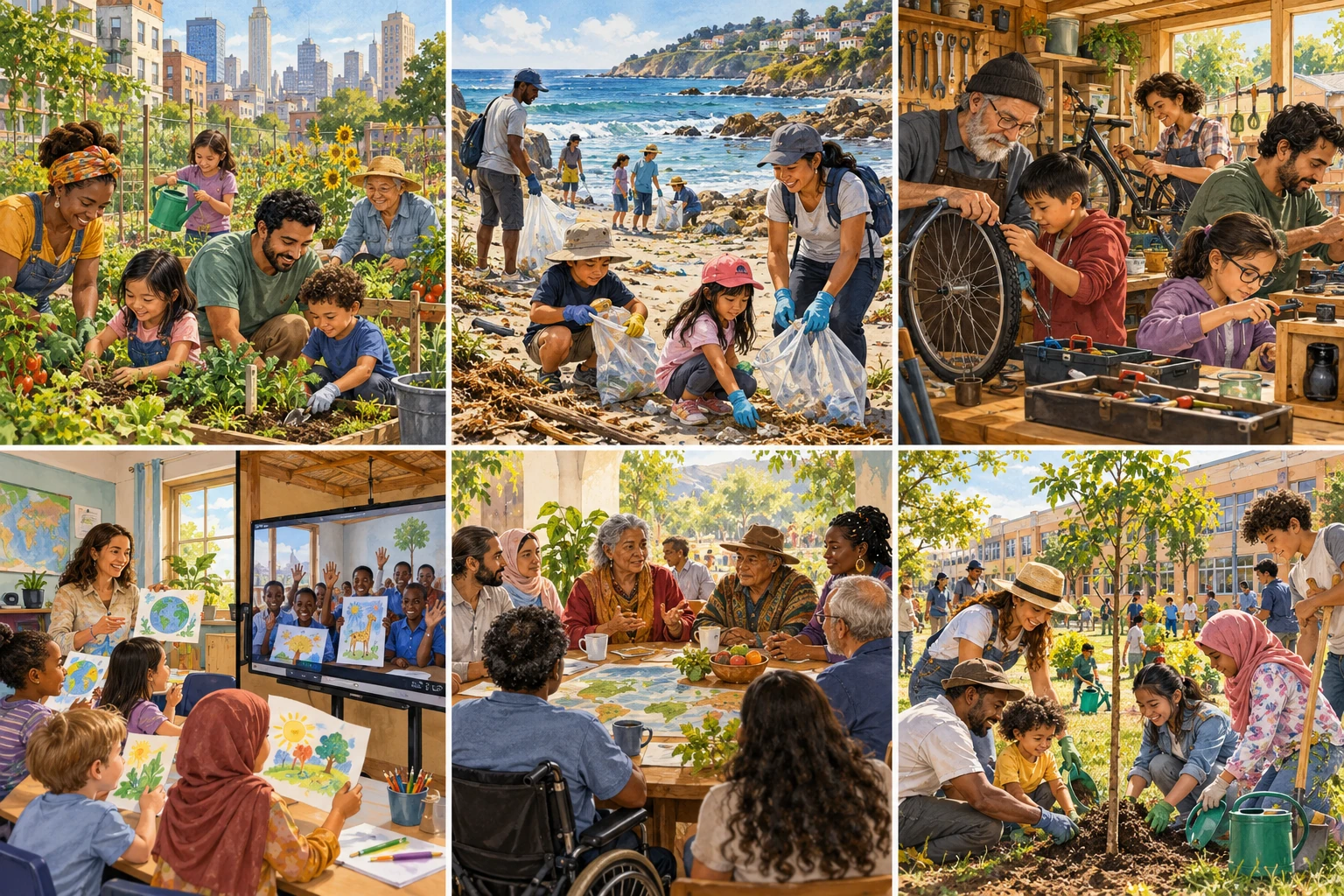
In one room, children are learning. In another, teachers are preparing lessons and trying to meet the needs of those children.
Nearby, farmers are growing food, drivers are transporting it and people are working in shops where families obtain what they need.
In other rooms, healthcare workers are caring for patients. Tradespeople are building and repairing. Engineers are designing systems. Artists are creating. Caregivers are supporting people whose contributions and needs may receive little public attention.
There are rooms where laws are written, public money is allocated and disputes are heard. There are rooms concerned with safety, emergency response and national security.
None functions entirely on its own.
A school depends on the circumstances of its families, the preparation of its teachers, the condition of its buildings and the resources available to it.
A business depends on workers, customers, infrastructure and the materials it uses.
A family’s well-being can be affected by decisions made in rooms its members have never entered.
When people struggle in one room, we may see the immediate difficulty without recognising the connections that helped create it.
A child having trouble learning might also be dealing with an unstable home, hunger or fear. A worker who appears exhausted may be balancing several jobs and caregiving. A small business facing rising costs may be affected by events far beyond its community.
Seeing those connections does not mean we already know the explanation. It gives us a reason to look more carefully.
The Connections Between Countries
Now step back and look at the homes within the greater house.
A product bought in one country may contain materials extracted in another, components made in several others and work contributed by people along a long route.
The buyer sees the finished object. Much of the story remains out of sight.
Who made it? Under what conditions? What happened to the land and water involved in its production? Can it be repaired? Where will it go when it is discarded?
These questions turn an ordinary purchase into an opportunity to understand our connections.
The same applies to information. A report from another country can influence how people vote, invest, travel or understand their neighbours. An accurate account can broaden understanding. A misleading one can spread suspicion.
Our connections can create benefits: shared discoveries, useful trade, cultural exchange and help during difficult times. They can also carry difficulties from one place to another.
Understanding both is part of seeing the whole house.
We Share More Than Connecting Doors
The house has shared foundations and living systems.
Air, water, soil, oceans and the wider web of life support the people in every room. Political boundaries help organise responsibilities, but they do not contain every consequence of what happens within them.
Imagine someone saying:
“My room is clean now. I have moved the waste into the corridor.”
The room may look better, but the house has not become healthier.
Or imagine repairing one part of a shared system while ignoring damage elsewhere. The immediate improvement may be useful, yet difficulties can remain for everyone depending on that system.
This is a way to examine real decisions. Are we reducing a problem, or relocating it? Are we accounting for its consequences, or leaving someone else to carry them?
An improvement deserves to be examined both where its benefits appear and where its costs are felt.
There Are Rooms Within Every Room
A country is not one person with one opinion.
Within it are people who agree, disagree, cooperate, struggle and live under very different circumstances. The same is true of professions, religions, political parties and communities.
A government’s decision does not tell us what every citizen believes. A company’s policy does not describe the character of everyone working there. A harmful action by someone in a group does not make every member responsible for that action.
If we speak about an entire home as though everyone inside is the same, we lose the detail needed to understand it.
The wider view asks us to notice both the institutions making decisions and the individuals living with their consequences.
Some people have considerable influence. Others have very little. Some benefit from an arrangement. Others work within it because they see no practical alternative.
Recognising these differences helps us examine responsibility fairly and identify opportunities for change.
What We Can Learn by Visiting Another Room
People living in different rooms possess knowledge that others may lack.
A teacher understands aspects of a classroom that a distant administrator may miss. A mechanic knows what makes a machine difficult to repair. A caregiver sees how a service works when someone actually needs it.
Someone living near a river may notice changes before those changes attract wider attention. A person affected by a policy may recognise a difficulty that was absent from the plan.
Formal education and specialist knowledge are valuable. So is experience.
A fuller understanding becomes possible when those kinds of knowledge can meet, question one another and contribute to a common inquiry.
That requires listening without assuming that a person’s title, income or background determines the value of everything they say. It also requires examining claims rather than treating every account as automatically correct.
We can respect a person while asking for clarification, evidence and other perspectives.
A House Where People Can Speak
Imagine a shared communication system through which people in different rooms can describe what they are experiencing.
A farmer could explain a production difficulty. A family could describe the consequences of rising costs. An engineer could suggest an alternative. Someone elsewhere might recognise the problem and share what their community has tried.
For that conversation to be useful, people need understandable information and opportunities to ask questions. Language differences should not unnecessarily prevent participation.
They also need clear expectations: respectful communication, honest acknowledgement of uncertainty and practical ways to correct mistakes.
Some people may need to contribute without displaying their names. Others may want their experience and identity known. Those choices need to be handled carefully, with realistic explanations of what privacy protections can and cannot provide.
A worldwide conversation becomes valuable when people can contribute knowledge, examine differences and learn from what others see.
How AI Could Help Us See the Connections
Human beings can bring lived experience, local knowledge, judgment and a sense of purpose to this work.
AI can assist by organising information, translating contributions, comparing explanations and helping people explore possible consequences. Machinery and other technologies can help carry out suitable physical tasks.
These tools could make it easier to connect knowledge that is currently separated.
But an AI’s account needs examination. It may misunderstand, omit context or produce an error. Its usefulness depends on the quality of its information, its design, the tools available to it and how people guide and check its work.
A responsible system would help people investigate rather than ask them to surrender their judgment.
The question is what we want these capabilities to serve.
Could they help meet essential needs, reduce exhausting work and give people more time for relationships, learning, creativity and care for the living world?
Could people across different countries share the benefits while preserving their freedom, cultures and ability to make meaningful choices?
Those are possibilities worth exploring together.
Caring for the Whole House
Seeing the greater house does not require everyone to live identically.
Different communities can retain their languages, traditions and ways of life. Cooperation can begin with recognising shared needs and the consequences of our choices.
Nor does a wider perspective require one person to solve every problem.
We can begin in a familiar room:
What am I noticing here?
What helps explain it?
Who else is affected?
What could we learn from people elsewhere?
What change could improve this situation without creating unnecessary harm in another room?
A small observation can lead to a larger understanding. A local improvement can become knowledge another community finds useful.
The work also needs to include people who maintain the house: those growing food, caring for others, repairing equipment and keeping essential services functioning. Their knowledge and well-being belong at the centre of the conversation.
The House We Leave Behind
Every generation inherits a house shaped by earlier choices.
We inherit achievements worth preserving, difficulties that need attention and arrangements that may once have served a purpose but now deserve reconsideration.
Our choices will become part of what the next generation receives.
Children living in different countries may never meet, yet they will share the consequences of many decisions being made today. They deserve consideration beyond the boundaries of our immediate room.
Governing for Life invites people to explore that wider perspective: to share what they know, ask what they do not understand and examine how our systems could better support people and the living world.
We do not have to see every room at once. We can begin by recognising that the room we know is connected to many others.
Planet Earth is the house we share. Caring for our own room and caring for the whole house are connected responsibilities.
What are you noticing in your room?
Your experience can help others understand a connection they have not seen. Tell us what you have observed, what you would like to understand and what evidence or experience might help.
Ask a question Join the discussion
Different houses, different questions
Every country has its own history, cultures, institutions and everyday circumstances. A useful question begins there, with the knowledge of people who live and work within it. We can compare experiences without assuming that one country’s arrangements suit every other country.
Freedom to Create · Governance and participation · Economy and environment