Education through the ages: knowledge, authority, and care
What do we teach people to do with what they know—and how do we teach them to regard one another? This question connects the history of education with the purpose of Governing for Life. Knowledge can help communities grow food, care for illness, build safely, preserve culture, and resolve disagreements. The same knowledge can become a tool for exclusion or control. Our concern is both what learners gain and how that learning serves life.
This website addition brings together selected historical examples, Michael Simonson’s perspective, and proposals for discussion. It is not a complete history of every civilization. The revised Word and PDF editions of the discussion paper include this addition.
Learning began before schools
Education is broader than schooling. Children learned through observing, practicing, listening to stories, and participating in family and community life long before written records. We cannot name the first moment when humans recognized its value. Written evidence helps us understand particular forms of organized education, but it does not mark the beginning of human intelligence or meaningful learning.
Research documents scribal education in Mesopotamia during approximately 2335–2150 BCE, including instruction closely tied to imperial administration. This is evidence of early formal training, not proof that one society invented all education. [H1]
What counts as educational success?
A system may successfully prepare officials while leaving most children outside its doors. Another may preserve important knowledge while limiting which questions students can ask. We therefore examine purpose, participation, teaching, authority, contributions, and restrictions together. The examples below come from different periods and scales: some concern institutions, others wider traditions. They should not be read as a league table of civilizations.
We also distinguish the end of an institution from the decline of a civilization. Schools can change, recover, or leave knowledge that survives their buildings. Conflict, changing political authority, and loss of support can disrupt learning; none should be used as a universal explanation for a society’s downfall.
Mesopotamia: learning to administer a complex society
Purpose and contribution. Scribal training prepared people to work with writing and administrative institutions. A society able to train administrators could record and coordinate activities beyond what any one person could remember. Research on the Sargonic period connects instruction directly with that administrative purpose. [H1]
Authority and limits. This was specialized training, rather than universal schooling. Its institutional setting reminds us to ask whose needs a curriculum serves. Preparing an effective administrator does not by itself establish that the administration treated everyone fairly.
Change and lesson. The evidence discussed here describes a particular period, not a single continuous system whose downfall can be dated from it. The lesson we draw is that useful technical competence needs an accompanying question: what responsibilities come with the power to organize other people’s lives?
Ancient Egypt: practical knowledge and the status of the scribe
Purpose and contribution. The Rhind Mathematical Papyrus contains worked mathematical problems and is described by the British Museum as probably a textbook for scribes. It offers a surviving example of practical knowledge being organized for teaching. [H2]
Authority and limits. The Teaching of Khety, often called the Satire of Trades, contrasts the hardships of manual occupations with the advantages of a writing career. This is a particularly clear example of educational literature promoting the status of literate work. One text does not tell us what every Egyptian believed. [H3]
Change and lesson. These sources do not establish a single cause for the end of Egyptian educational traditions. They do help us see a persistent danger: praising literacy can slide into devaluing the people whose physical work supports the community. A classroom can celebrate writing without diminishing farming, building, or caregiving.
Greek and Roman examples: intellectual opportunity shaped by circumstance
Purpose and contribution. In the Athenian households described by historical sources, boys’ formal education included reading, writing, arithmetic, and music; further study was possible for those who did not need to work. Girls’ learning was commonly directed toward household responsibilities. This describes Athens, not an identical arrangement across all Greek communities. [H4]
Roman education could progress from basic literacy and arithmetic to literary study and training in public speaking. Advanced study helped prepare people for public roles, while affordability and family circumstances restricted how far many children could continue. [H5]
Authority and limits. These examples show that rich intellectual traditions and unequal opportunity can coexist. Learning to speak persuasively is valuable; it also creates a responsibility to distinguish sound reasoning from manipulation.
Change and lesson. These sources describe learning arrangements rather than proving why Greek or Roman political systems declined. Their enduring lesson for this proposal is to preserve opportunities for broad learning while widening access beyond those whose families can afford time and instruction.
Imperial China: examinations, opportunity, and hierarchy
Purpose and contribution. Civil service examinations linked mastery of approved Confucian texts with eligibility for official roles. The system supported literacy and offered some routes to social advancement. It made education central to the organization of government. [H6]
Authority and limits. Extended preparation generally required family resources or wealthy sponsorship. Girls and women had fewer educational opportunities. Successful candidates could gain considerable social authority. A shared curriculum therefore supported both advancement and the reproduction of hierarchy. [H6]
Change and lesson. The examination system was abolished in 1905 amid wider reforms responding to internal pressures and foreign imperialism. Its replacement should not be confused with the end of Chinese learning or treated as the sole explanation for the Qing dynasty’s collapse. [H7]
Our proposed lesson is to assess both the fairness of selection and the fairness of preparation. An examination cannot provide equal opportunity if some children lack the teaching, time, or resources needed to reach it.
Nalanda: sustained scholarship and learning through debate
Purpose and contribution. UNESCO describes approximately 800 years of organized knowledge transmission at Nalanda. Its monastic and scholarly traditions included logic, philosophy, and debate as a method of learning. Its influence extended through scholars and educational traditions in Asia. [H8] [H9]
Authority and limits. Entrance examinations and a formal institutional structure were part of this tradition. Recognizing its achievements does not establish universal access or unrestricted questioning in every aspect of its life. [H9]
Disruption and lesson. The modern Nalanda University’s archaeology course identifies evidence of destruction, including fire layers and architectural collapse. A brief account should not turn complex evidence into a confident single-cause story. UNESCO also traces continuities in educational practices beyond the original institution. [H19] [H9]
The lesson we draw is to protect learning communities and the transmission of their knowledge, and to make reasoned discussion part of education rather than treating disagreement itself as failure.
Timbuktu: scholarship, exchange, and the preservation of knowledge
Purpose and contribution. Timbuktu was a religious, cultural, and commercial center where people traveled to learn and manuscripts were written, copied, and preserved. Its collections demonstrate a substantial West African written scholarly tradition. [H10]
Authority and limits. Surviving manuscripts show achievement, but do not alone tell us how equally every group could participate. We should respect this heritage without assuming either universal access or a uniform model of schooling.
Disruption and lesson. UNESCO documented manuscript losses and extensive damage following the occupation of the region in 2012–2013, alongside the rescue of large collections. This was an attack on a continuing heritage, not proof that its knowledge or community had disappeared. [H11]
For Governing for Life, preservation is a community responsibility: conflict can damage generations of learning, while librarians, families, and other custodians help carry it forward.
Bologna: learner participation, independence, and renewal
Purpose and contribution. The University of Bologna traces its early development to associations of students who helped shape teaching and paid teachers directly. Study of Roman law contributed to responses to the changing legal needs of medieval society. [H12]
Authority and limits. Its institutional history describes later restrictions under papal control, including the removal of student leadership and a religious profession requirement that discouraged students of other faiths. It also records periods of crisis and renewal. [H13]
Change and lesson. Bologna continues today; decline was not its final destination. This example invites us to protect participation and intellectual independence while recognizing that institutions need to adapt. It does not mean every historical university shared Bologna’s arrangements.
When schooling is used to erase identity
History also requires examples of harm. The U.S. Department of the Interior’s investigation documents federal Indigenous boarding schools using education for forced assimilation, including renaming children and suppressing their languages and cultural practices. [H14]
A system’s success at imposing its rulers’ objectives can be a profound failure toward children. The lesson for this proposal is to judge education by dignity, safety, and the lives of the people affected—not simply institutional discipline or compliance. Learning should not require a child to regard their family or cultural identity as inferior.
A wider principle: education as a human right
Article 26 of the 1948 Universal Declaration of Human Rights recognizes education as a right, connects it with the development of the person and respect for rights, and calls for understanding among peoples. This is a stated international principle; its declaration does not mean its aims have been fully achieved. [H15]
The international comparisons elsewhere on this page examine present arrangements for access and funding. Read together with these historical examples, they invite us to ask how a society can make meaningful learning available throughout life without turning educational differences into differences in human worth.
Knowledge does not determine human worth
Specialized knowledge can qualify someone for a particular responsibility. It does not make that person more valuable as a human being. A doctor’s clinical knowledge matters when treating illness. A farmer’s knowledge matters when producing food. A caregiver may understand needs that a professional has not yet noticed. Different responsibilities require different competence; everyone deserves dignity.
The Egyptian teaching about scribal careers and the social authority associated with Chinese examination qualifications show how education could become entwined with status. They do not prove every educated person was contemptuous of others. The concern is the judgment a system may encourage: “My qualification makes me superior,” instead of “My knowledge gives me something useful to contribute.” [H3] [H6]
Illustrative classroom example: a student who writes an excellent essay and a student who repairs a damaged chair have different achievements. A teacher can explain what each learned and where each needs further practice. Neither achievement requires humiliating the other student. Recognizing practical knowledge should broaden opportunity, not become a reason to deny anyone access to academic study.
Professional knowledge in service of others
Michael points to Doctors Without Borders as an example of skills used for the wider good. Its charter commits the organization to assistance without discrimination and independence from political, economic, and religious forces. It demonstrates that a service ethic can be expressed through present-day institutions. [H17]
We should not assume doctors or lawyers in earlier centuries were generally less motivated by wealth or position, or that today’s professionals share one motivation. That comparison requires evidence for particular times and places. Our proposal instead asks what education and professional institutions reward: careful work, public service, and integrity, alongside the income needed to sustain that work.
For all who nurture young minds
Michael’s writing for Energetically Sensitive Child emphasizes the responsibility of parents, teachers, and caregivers to offer children compassion, understanding, and room to express individuality. He describes the atmosphere of a classroom in terms of energy and collective consciousness. This is his spiritual perspective, informed by his work with people. [H18]
Readers can also understand the practical concerns through everyday relationships: how adults listen, the tone they use, whether they respond fairly, and whether a child can make a mistake without humiliation. Research summarized by the CDC associates perceived teacher care and support with greater school connectedness and improved engagement in mathematics and reading. That evidence supports the importance of caring relationships; it does not establish the spiritual mechanisms described in Michael’s account. [H16]
Teaching with care and room to question
A compassionate teacher offers encouragement, clear explanations, and honest feedback. Care does not require agreeing with every answer or removing expectations. It means guiding a learner without turning a difficulty into a judgment about who the learner is.
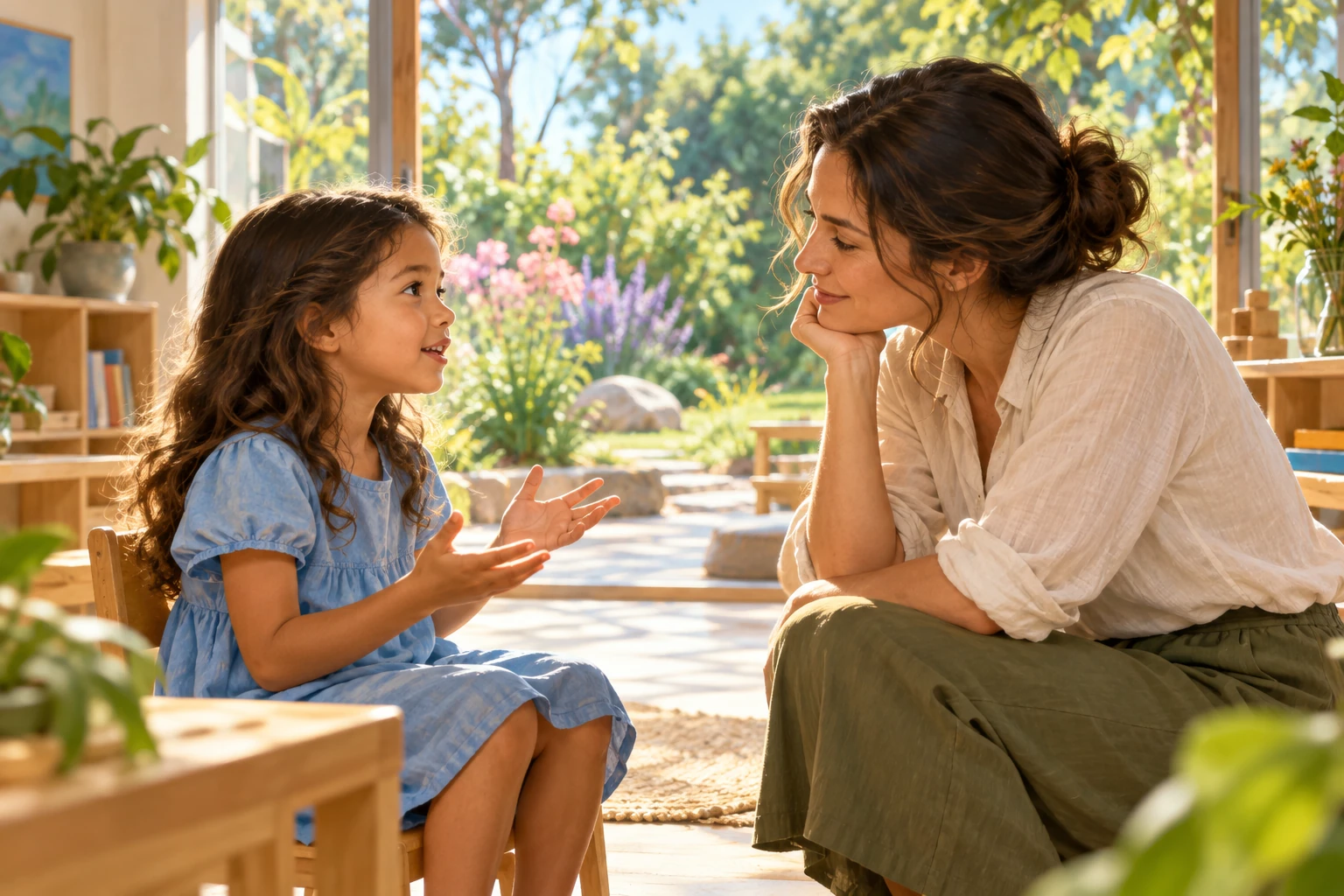
Illustrative example: a child gives an incorrect answer. “What led you to that conclusion?” gives the teacher information and the child an opportunity to explain. Ridicule may instead teach the child to remain silent. Our proposed approach combines warmth with the responsibility to examine evidence and correct mistakes.
A child should be able to question an educational, political, or spiritual claim respectfully. This applies to the ideas on this website too. Open-mindedness includes examining our own assumptions and allowing people to disagree without making them feel less worthy.
Supporting the adults who care for children
Adults’ personal struggles can affect how they respond to children. Struggling does not automatically make a parent or teacher uncaring or unsafe. The relevant questions concern conduct, its effect on children, and what support or intervention is needed.
We propose manageable workloads, time to speak with children, access to support, and fair accountability when behavior causes harm. Asking educators to be endlessly patient while giving them insufficient time and help is an incomplete policy. Supporting their well-being belongs within the same responsibility to care for children.
Illustrative example: an exhausted teacher repeatedly snaps at a class. A school should address the behavior, listen to affected children, and examine workload or support needs. Understanding the teacher’s circumstances should inform the response while protecting children from continuing mistreatment.
A place where a child can feel safe
For a child facing instability at home, a reliable adult at school may be particularly important. The CDC emphasizes supportive relationships for students experiencing uncertainty or trauma. [H16] A learning environment can offer predictable routines, patient help, and opportunities to participate without requiring children to disclose personal experiences publicly.
Teachers should avoid assuming they know what a quiet or distressed child is experiencing. Feeling safe does not guarantee disclosure. If a child raises a concern, the adult should listen and follow appropriate safeguarding procedures, including considering whether involving a particular caregiver could place the child at risk. Compassion and trained support need to work together.
The classroom as a community
In Michael’s perspective, the classroom reflects the larger community’s consciousness. In practical terms, it is also a place where children repeatedly experience how authority, disagreement, difference, and cooperation are handled. Our proposal is that these daily experiences should be treated as part of education’s purpose.
Illustrative example: students disagree about how to protect a local stream. They investigate, hear different concerns, check their claims, and revise a shared plan. Learning includes science and communication, but also the experience of disagreement without contempt. This is an opportunity to practice cooperation, not a guarantee that every conflict will disappear.
Responsibility beyond the classroom
A caring education system requires cooperation beyond teachers. We propose the following responsibilities because each addresses a condition that one classroom cannot solve alone:
- Governments: fund accessible learning, protect children, support educators, and evaluate participation and well-being alongside attainment. Access on paper needs resources in practice.
- Employers and professional bodies: provide fair routes into skilled work and value integrity, service, and continuing learning. Credentials should demonstrate relevant competence rather than function as a blanket measure of worth.
- Families: take an interest in children’s learning, listen without immediate judgment, and receive support when circumstances make participation difficult.
- Communities: provide libraries, practical mentors, cultural knowledge, and opportunities to contribute. Learning draws on more than one kind of expertise.
- AI developers and schools: use technology to assist explanation and exploration, protect privacy, and retain human responsibility for care. A helpful response from a system does not establish that it understands everything about a child’s circumstances.
Success should be evaluated through meaningful learning, access, safety, belonging, the ability to question, and opportunities to contribute. These are proposed priorities, not a claim that a single measure captures every child’s experience.
Education can develop knowledge without creating superiority, encourage responsibility without suppressing questions, and prepare people to serve life while respecting one another.
Sources for this addition
Historical facts are linked to their supporting sources. The lessons drawn from them and the recommendations for today are proposals for discussion. The World History Encyclopedia entries are secondary historical summaries; the remaining references include institutional research descriptions, museum collections, public records, and organizational statements.
- H1. Harvard Museum of the Ancient Near East — Scribal Education in the Sargonic Period
- H2. British Museum — Rhind Mathematical Papyrus
- H3. University College London — Teaching of Khety: the Satire of Trades
- H4. World History Encyclopedia — Family life and education in ancient Greece
- H5. World History Encyclopedia — Roman Education
- H6. Columbia University, Asia for Educators — Classics and Civil Service Examinations
- H7. Columbia University, Asia for Educators — Nineteenth-century reform
- H8. UNESCO — Archaeological Site of Nalanda Mahavihara
- H9. UNESCO World Heritage Committee — Nalanda scholarship and debate
- H10. Library of Congress — Ancient Manuscripts from Timbuktu
- H11. UNESCO — Damage to Timbuktu’s cultural heritage
- H12. University of Bologna — The birth of the Studium
- H13. University of Bologna — Nine centuries of history
- H14. U.S. Department of the Interior — Boarding school investigative report
- H15. United Nations — Universal Declaration of Human Rights, Article 26
- H16. CDC — Teacher Caring and Support
- H17. Doctors Without Borders — Charter and principles
- H18. Michael Simonson — The Power of a Loving Teacher
- H19. Nalanda University — Archaeology of Nalanda Mahavihara Region
An education model people can use
Drawn from the Governing for Life discussion paper. Linked references open the supporting sources.
What an impressive performance may conceal
When a young person sings beautifully, plays a difficult piece, paints with confidence or builds an ingenious device, observers often describe them as special. The visible achievement can conceal years of access to materials, patient guidance, practice and encouragement. Those opportunities deserve attention when we ask why other children have not yet revealed comparable interests or skills.
A fair education system should let children try before deciding what they are capable of. A quiet student may become an expressive storyteller; a restless student may concentrate while building; a child who finds one kind of mathematics difficult may begin to understand it through music or measurement. These are possibilities to explore, not fixed categories of learner. An interest should open doors rather than assign a child to a permanent identity.
Children differ in abilities, circumstances and the pace at which they learn. Opportunity and effort cannot guarantee that everyone will reach the same level in every activity. Yet an exceptional performance can invite a useful question: could I learn something like that if I had access, guidance and time? Education should make that invitation available widely, including to children who never become public performers or win competitions.
Everyday examples of opportunities to explore
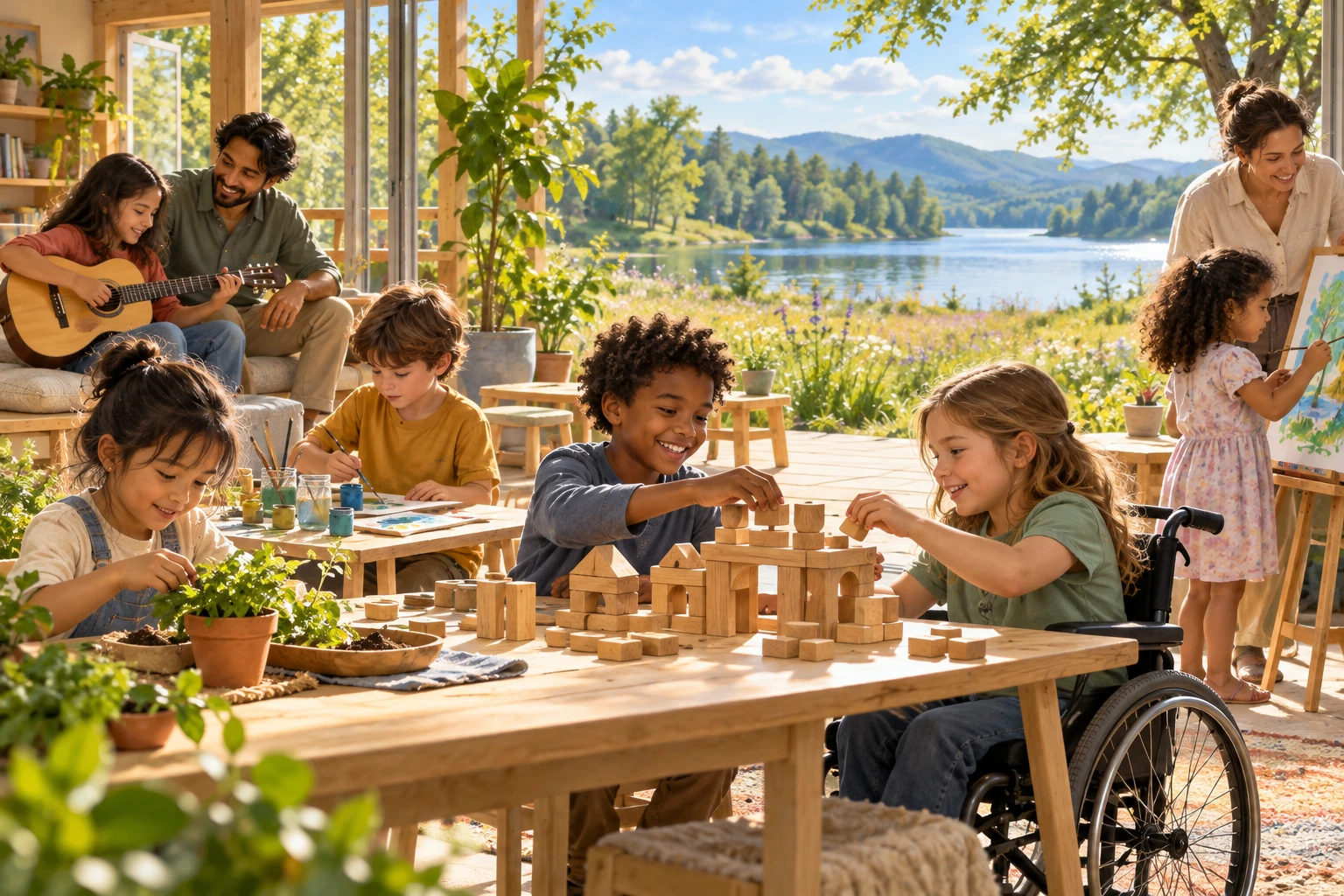
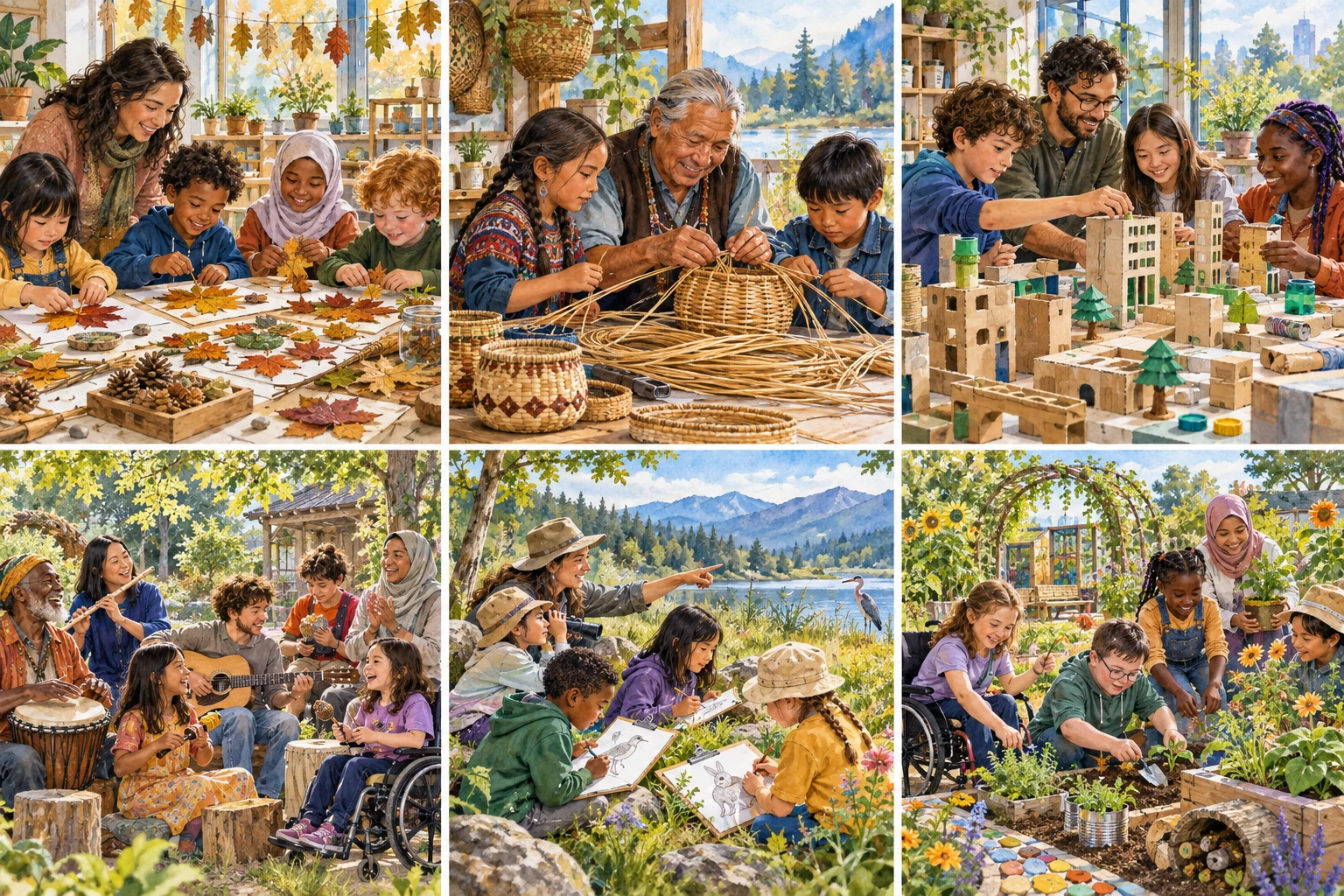
The following examples describe proposed learning experiences. They illustrate how interests could connect with wider skills; they are not reported experiments or guarantees of a particular result. Materials and teaching would be adapted for age, safety, disability and local resources.
Singing and storytelling. Children could choose songs, explore the meaning of lyrics and create a short story for an audience. Teachers could connect the activity with language, memory, listening and expression. Participation could include using sign language, composing, recording or arranging rather than requiring every child to sing publicly.
Playing and making music. A shared instrument library could allow children to try percussion, keyboards or string instruments without a family purchase. Rhythm offers a practical setting for exploring patterns and fractions. Rehearsing together creates opportunities to practice listening and taking turns. Enjoyment and gradual progress would matter alongside performance.
Painting and visual design. A child could sketch a familiar place, mix colors and design a poster about protecting a nearby river. Reading, observation and communication would have a purpose within the artwork. Teachers would offer technique and feedback without requiring every student to copy the same image.
Building and repairing. Students could construct cardboard bridges, design shelters for a model community or repair an age-appropriate object under supervision. They could compare materials, measure dimensions, record what failed and revise the design. A failed first attempt would provide information for the next one.
Science and curiosity. Children could compare plant growth under different conditions, test model boats or investigate how a simple circuit works. They would learn to ask a testable question, change one factor when appropriate and distinguish observations from guesses. A project could begin with something the child notices outdoors.
Gardening and food. A class could grow herbs, examine soil organisms and plan a small meal using what it harvests. The activity could link biology, measurement, budgeting and care for living systems. Raised beds, containers or accessible indoor growing spaces would permit participation in different settings.
Movement and practical teamwork. Dance, adapted sport or a nature walk could give children ways to explore movement, cooperation and their surroundings. Students could help plan a route or choreograph a short sequence. Activities would accommodate different bodies and abilities rather than rank everyone by a single physical standard.
Community projects. Older students could interview residents, map an accessibility problem or develop a proposal to reduce waste. They would need to check information, hear differing views and explain their reasoning. The project could show how learning helps a community while teaching that good intentions still require evidence.
The first years deserve attention and support
The first four or five years deserve sustained public attention. Early relationships and experiences help establish foundations for later learning, behavior and health. Brain development begins before birth; early childhood is a particularly active period for forming connections, and development continues afterward. There is no single birthday at which the opportunity to learn closes. [E29]
For a young child, learning can begin when an adult responds to a sound, shares attention or follows a question. Responsive exchanges help support development. This makes everyday care and relationships central to the education discussion, alongside formal preschool provision. [E30]
The proposed early-years model would provide safe play, conversation, stories, music, movement and opportunities to explore, with attentive adults who notice and respond. It would support caregivers with accessible childcare, practical guidance and routes to additional help. Its purpose would be to cultivate security and curiosity, without pressuring toddlers to demonstrate exceptional achievement.
Early experiences can influence a child’s view of learning and of themselves. They do not dictate an unchangeable future. Children who have faced adversity deserve later opportunities and sustained support, and adults deserve chances to learn too. Investment in the early years should be followed by continuing investment throughout childhood and beyond.
A holistic model that people can use
The model proposed here would develop knowledge and practical competence alongside creativity, physical well-being, emotional skills, relationships and civic understanding. These aims fit the broader direction of the OECD Learning Compass, which includes agency, well-being and knowledge, skills, attitudes and values. That framework describes educational aspirations; it does not establish the effectiveness of this particular model. [E31]
A school day could include explicit instruction in reading, mathematics and other essential subjects, followed by guided projects and regular opportunities to explore unfamiliar activities. Teachers could connect a student’s interests to shared learning goals and identify where direct instruction or additional practice is needed. Children would have meaningful choices, with guidance and expectations.
Each student could have a regularly reviewed learning plan recording strengths, interests, progress and support needs. It would remain open to change: a child who loves painting today may discover engineering next year. Families and students would help shape the plan, while teachers retained responsibility for ensuring that essential learning was not missed.
Assessment could combine sound checks of foundational knowledge with portfolios, practical demonstrations and conversations about learning. A student might explain a scientific result, demonstrate a repair or discuss revisions to a story. Schools would still check whether students can read, reason and use mathematics. They would also show capabilities that one examination may miss.
Access would require concrete provision: shared instruments and tools, accessible spaces, affordable transport, meals where needed and staff able to support different learners. Community libraries, workshops and arts organizations could help extend opportunities. Partnerships would need suitable supervision and reliable funding rather than dependence on families’ connections.
A teenager drawn to electrical work could follow a respected vocational route with further study available later. A student interested in healthcare could receive help with prerequisites and affordable training. A parent returning to education could attend part-time with childcare support. These examples show why a lifelong system needs several routes and ways to change direction.
For learners, tuition-free access would be most useful when it came with adequate teaching and realistic support to participate. For governments, the task would be to fund staff, facilities and capacity sustainably. The sections below examine debt, public finance and family pressures; a country comparison at the end of this part provides evidence and cautions for designing the model.
How to put the model into practice
Begin by asking students, families and teachers which opportunities and barriers exist locally. Establish a baseline for foundational learning, attendance, safety, access and staff capacity. Fund a manageable pilot that adds guided exploration and support without reducing essential teaching. Schools serving disadvantaged communities should have a genuine opportunity to participate.
Give teachers planning time, useful training and access to specialist colleagues. Budget for materials, maintenance and accessibility, with attention to costs families might otherwise absorb. Publish what the program costs and how participants are selected, so its benefits and exclusions can be examined.
Evaluate whether more children participate, gain skills and feel they belong, and whether access gaps narrow. Check for unintended effects, such as weaker foundational learning or excessive staff workload. Expand successful elements, revise unsuccessful ones and continue listening to children whose needs remain unmet.
The measure of success would include the child who becomes a confident musician and the child who simply discovers that learning can hold their interest. It would include the adult who retrains without sacrificing basic household security. A society governing for life would make these opportunities an ordinary part of public provision.
The purpose of education
A country’s future capacity depends partly on what its people can understand, create, maintain and improve. Education develops the ability to earn a living, but it also shapes how people raise children, judge information, resolve conflict, care for the natural world and participate in public decisions. Within a framework that makes economics serve life, education therefore belongs among society’s essential investments.
The question “Are we educating children mainly to fill office towers and manufacturing plants?” identifies a real choice about priorities. Preparation for work is valuable: societies need capable technicians, carers, engineers, farmers, teachers and many other workers. However, employability is an incomplete measure of educational success. A person also needs the knowledge and freedom to question harmful practices, understand consequences and help improve the systems in which they work.
It would be inaccurate to describe every school as designed solely to supply labor. Finland’s curriculum explicitly includes thinking and learning, cultural competence, everyday life skills, multiliteracy, digital competence, working life, participation and a sustainable future. These published objectives show that broader purposes already exist in national policy. Whether they are achieved must be assessed separately. [E1]
This paper proposes a public purpose for education: equip each person to participate competently in society, discover and develop their capabilities, and understand how their choices affect other people and the living world. This is an ethical proposal informed by evidence, rather than a fact that research can prove to be everyone’s preferred purpose.
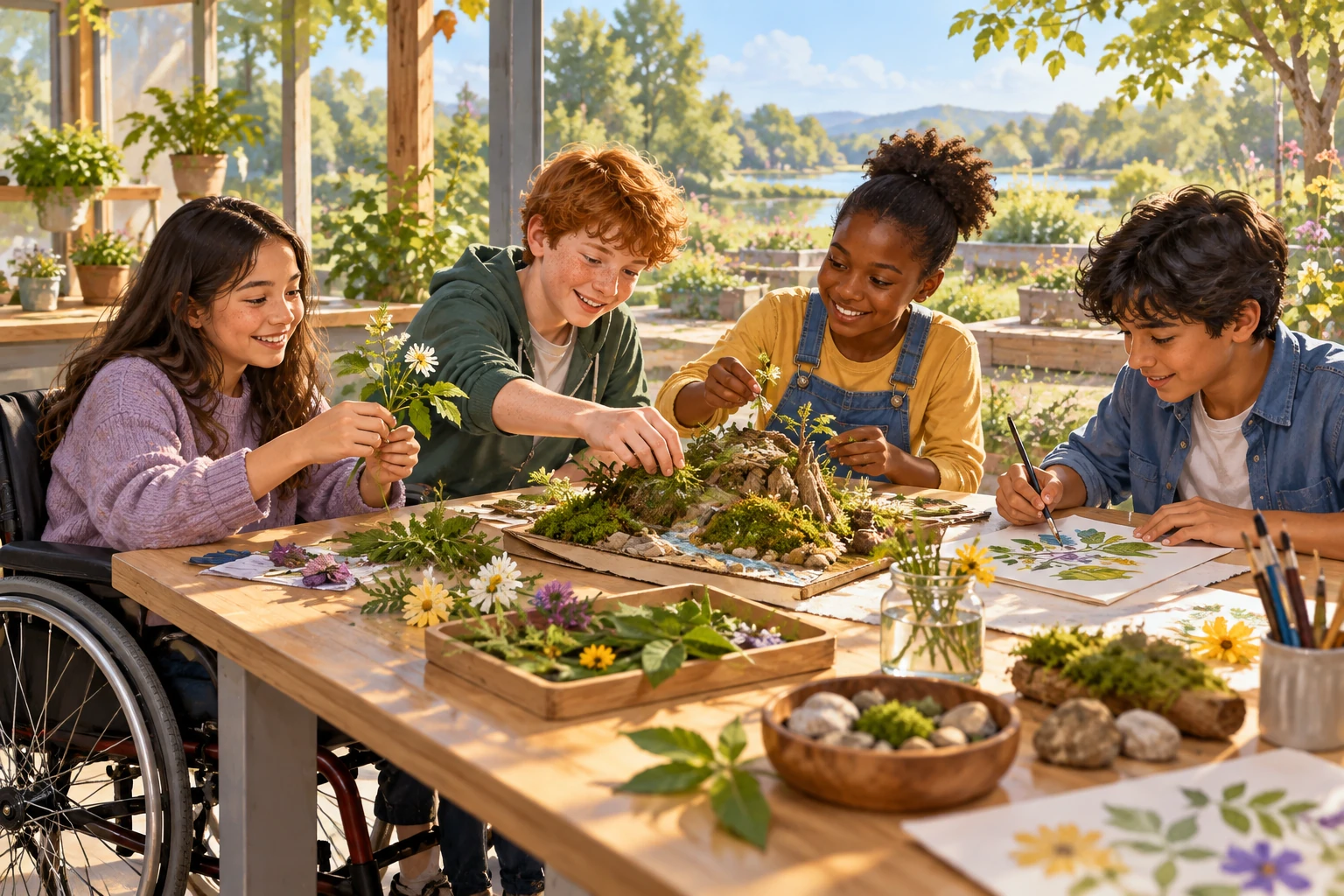
Education without a lifetime debt burden
The case for publicly financed education starts with a practical observation: society needs educated people, including people whose families cannot pay substantial fees. Requiring borrowing can finance access, but it also transfers risk to the learner. Someone who leaves without a qualification may face repayment without the expected earnings benefit. A capable person may also decide against enrolling because the financial risk seems too great.
Evidence supports concern about consequences beyond the classroom. Federal Reserve research on the 2023 restart of student-loan payments found spending reductions in areas more exposed to student debt. This study uses geographic spending data and identification assumptions; it is not a direct observation of every borrower’s household decisions. Earlier research also investigates effects on homeownership. These findings justify examining debt burdens as part of household security, while avoiding the claim that student debt alone explains all delayed adult milestones. [E17, E18]
A randomized study of a targeted tuition-free offer to high-achieving, low-income Michigan students reported university application rates of 68% among those offered the intervention versus 26% in the comparison group, and enrollment rates of 27% versus 12%. The offer also communicated financial certainty. The experiment supports a conclusion about this package and population, not a claim that universal free tuition would produce the same increase everywhere. [E19]
The evidence therefore supports removing financial barriers as a credible way to widen opportunity. It does not prove that tuition-free education alone guarantees graduation, prosperity, equal opportunity or a financially self-funding system. Those outcomes depend on teaching quality, preparation, capacity, support, labor-market opportunities and the funding design.
What publicly funded education could improve
Potential benefits should be stated as pathways to test rather than promises that every policy will deliver:
- Access to talent. Lower upfront costs can allow capable people from more income groups to pursue study or training; the Michigan experiment demonstrates one specific example. [E19]
- Household flexibility. Preventing new tuition debt can leave future income available for housing, caregiving, savings or other needs. The size of that benefit depends on the debt avoided and how public funding is raised.
- Adaptation. Accessible adult education could make it easier to change occupations as technology, health needs and environmental conditions change.
- Public capacity. Training more capable teachers, technicians, healthcare workers and other specialists could improve essential services when employment, equipment and institutional funding are also available.
- Civic participation. Education that teaches evidence evaluation and public reasoning could strengthen people’s ability to assess policy; years of schooling alone do not guarantee sound judgment.
- Creative and practical contribution. Arts, trades, care, environmental restoration and scientific work could become more accessible choices when cost and debt are less restrictive.
These are reasons to investigate and design public provision, rather than a calculation of its net fiscal return. A country-specific assessment would need enrollment demand, teaching costs, available capacity, distribution of benefits and a credible funding plan.
What free education must mean in practice
Education can be free at the point of use while still requiring public resources. Teachers, buildings, laboratories, equipment and support staff must be funded. The policy choice concerns how those costs and risks are shared across society. The OECD identifies low-fee systems with extensive aid as well as high-fee systems with substantial aid; each has trade-offs. [E16]
A proposal to provide education freely to anyone seeking it should distinguish an entitlement to accessible learning from an unlimited guarantee of admission to every specialist course. Training surgeons, pilots or engineers requires competence and safe capacity. Financial exclusion can be reduced while preserving transparent readiness requirements, professional standards and alternative routes when a course is full.
A workable design could combine tuition-free public pathways with grants for essential living costs, childcare, disability access, transport, bridging courses and academic support. It could provide trades and apprenticeships alongside degrees, recognize prior learning, and permit adults to return without arbitrary age barriers. Open learning opportunities could coexist with capacity-limited professional programs.
Three funding questions need honest answers. First, does public support reach those who would otherwise be excluded, or chiefly subsidize students already able to attend? Second, will funding per student remain adequate if enrollment grows? Third, what is displaced from the public budget? A progressive funding design and strong earlier schooling can help prevent free tuition from becoming a benefit concentrated among already advantaged households.
Evaluation should measure entry, learning, completion, debt incurred for living expenses, and access by income and disability. It should also examine public cost and program quality. A policy can reduce fees yet fail students if classrooms become overcrowded or essential support disappears.
Family pressures are part of the learning environment
A child arrives at school with experiences from home and the wider community. Food insecurity, unsafe housing, violence, financial uncertainty and overwhelmed caregivers can affect the conditions in which learning occurs. Harvard’s Center on the Developing Child describes how persistent adversity and excessive stress can interfere with development, while supportive relationships can buffer harm. Ordinary, manageable challenge differs from prolonged harmful stress. [E20]
This supports the connection between family circumstances and schooling, but the relationship is not deterministic. Poverty does not establish that parents are angry or neglectful. Separation does not establish that a home is harmful, and a two-parent home does not guarantee safety. Children in every family arrangement can thrive. Financial stress is one influence among many, alongside disability, bullying, illness, temperament, relationships and the quality of support.
Some children express distress through anger, withdrawal or disrupted attention. Treating every difficulty only as disobedience may miss an underlying need. Conversely, compassion does not mean ignoring harmful behavior. Schools can combine clear boundaries with assessment, early help and supportive relationships, while avoiding diagnoses based on assumptions.
The governance implication is broader than asking teachers to solve everything. Affordable housing, reliable food, access to healthcare, childcare and support for caregivers belong in the same discussion as education. The proposed approach addresses pressures affecting families while improving school support; it does not make parents the explanation for every learning difficulty.
Schools need the capacity to support children
UNESCO’s 2024 Global Report on Teachers projected a need for 44 million additional primary and secondary teachers by 2030 to achieve universal education. This is a global projection, not a count of current vacancies in every country. It demonstrates the scale of the staffing challenge and the need to examine recruitment and retention alongside curriculum reform. [E21]
A school expected to teach, recognize distress, support disabilities, prevent bullying and work with families needs the staff, time and expertise to do those things. Proposed investments include qualified teachers, manageable workloads, accessible counselors and specialist services, practical referral pathways, and time for collaboration. The right staffing model depends on local needs; no single class-size rule establishes success.
Teachers should be able to identify that help is needed without being required to become every child’s therapist or social worker. Families should have a clear route to support, and children should not have to become disruptive before assistance becomes available. Schools should report whether support reaches students and whether it improves attendance, safety, participation and learning.
Individual strengths and a shared foundation
Children differ in interests, experiences, pace, abilities and support needs. A student who struggles in one setting may contribute strongly in another: repairing equipment, composing music, growing food, caring for others, solving mathematical problems or communicating ideas. Schools should provide enough variety to discover these strengths instead of treating one narrow achievement measure as a complete portrait of the child.
Research on motivation supports taking students’ perspectives seriously. A 2025 systematic review and meta-analysis examines autonomy support together with instructional structure and links these approaches with learning and motivational outcomes. Its findings support meaningful choices alongside clear goals and guidance. They do not justify replacing instruction with unrestricted choice or claiming that interest alone ensures mastery. [E22]
An interest in a subject can create a route into demanding learning. For example, a child interested in boats can study buoyancy, measurement, materials, water quality, budgeting and navigation. A child interested in music can explore fractions, sound, history, collaboration and digital tools. These are illustrations of curriculum design, not findings from a trial of those particular lessons.
Students still need access to reading, writing, mathematics, scientific reasoning, history and civic understanding even when an activity is initially difficult or unappealing. These foundations can expand future choices. The question is how to teach them with relevance, patient support and appropriate challenge, while allowing interests to develop and change.
A useful approach combines shared foundations, varied practical and creative experiences, electives, feedback, disability accommodations and opportunities to change direction. Interest should open possibilities rather than become an early label that restricts a child. Strengths in care, craft, art or nature deserve recognition alongside conventional academic achievement.
Enjoyment and a sense of competence can support engagement, but happy children do not invariably become happy adults, and enthusiasm does not automatically produce higher intelligence or sound long-term judgment. When people describe a child’s positive “energy,” this paper interprets that as observable vitality, engagement and confidence, rather than claiming that research establishes a measurable human energy field as the mechanism.
Learning to see the larger picture
Understanding a small problem in its wider setting can be taught through explicit questions: What caused it? Which other systems are involved? Who benefits and who carries the costs? What happens immediately, and what might happen years later? What evidence would change our conclusion?
UNESCO’s guidance on education for sustainable development identifies systems thinking, anticipation, collaboration and critical reflection as learning objectives. This is a published educational framework, not proof that every school using its language achieves those competencies. [E23]
A lesson about a disposable appliance can connect design, repair, mineral extraction, labor, household costs and waste. A lesson about a river can connect science, agriculture, public health and water policy. Students can compare options and explain uncertainties rather than repeat a predetermined political answer. These examples connect education directly to the earlier sections on true costs and long-term stewardship.
AI may assist with explanations, translation, practice and access, but its answers must be checked. A proposed school policy should preserve human relationships, protect children’s data, address unequal access and measure whether students can reason independently. Ease of generating an answer is not the same as understanding it.
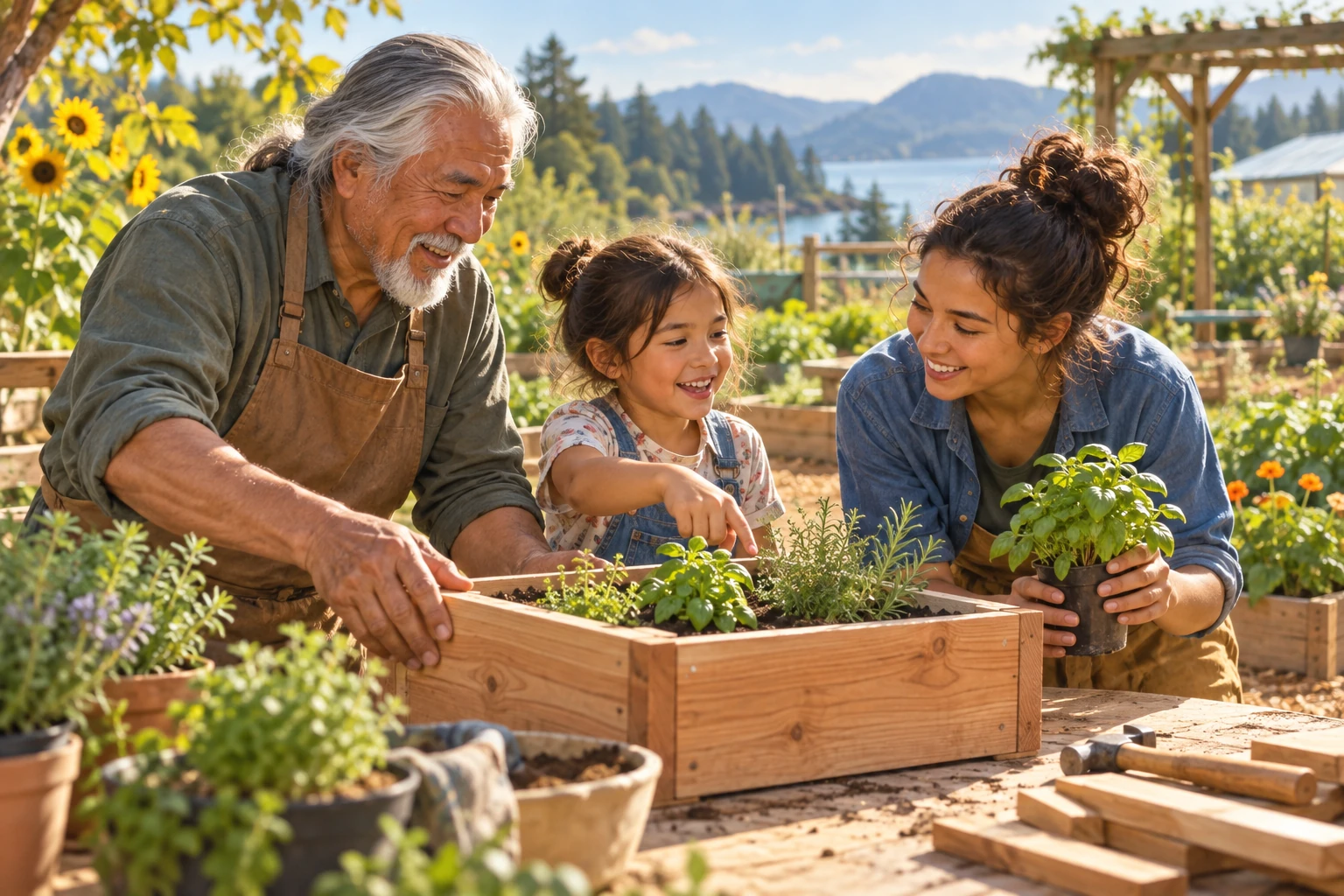
An education transition that can be evaluated
- Define the purpose publicly. Combine foundational competence, personal development, practical capability and informed participation; invite students, families and teachers into the discussion.
- Reduce financial exclusion. Build adequately funded public pathways and support the costs that prevent students from remaining enrolled.
- Support families and schools together. Connect education with housing, food, care and early assistance instead of shifting every pressure onto teachers.
- Broaden the opportunities children experience. Include arts, trades, science, movement, care and environmental learning while protecting foundational instruction.
- Keep pathways open. Make transfers, bridging courses and adult return routes practical; avoid treating early performance as a permanent verdict.
- Evaluate outcomes. Examine learning, attendance, well-being, completion, equitable access, costs and teacher retention. Compare implementation with stated goals and revise what fails.
The evidence supports a direction rather than one perfect national blueprint: lower avoidable barriers, maintain teaching quality, provide supportive environments, and combine meaningful student agency with structure. Governing for life requires asking whether educational policy expands people’s real capacity to learn and contribute, not merely whether it increases credentials or fills vacancies.
International evidence supporting the education proposals
What the international evidence can tell us
The comparisons below examine eight contrasting systems across North America, Europe, Asia, South America and Africa. They are representative examples, not an exhaustive survey or a ranking of whole societies. School education and university finance are different parts of a system; success in one does not establish success in the other.
PISA 2022 supplies a dated, common baseline for achievement among 15-year-olds. It assesses application of reading, mathematics and science. Singapore led all three domains; Estonia and Japan also performed strongly. The United States was above the OECD average in reading and science and close to it in mathematics. These results measure selected capabilities, not the full worth of a child or country. [E2, E32]
The finance comparison draws on Education at a Glance 2025 and national policy guidance accessed in September 2026. Report publication dates and underlying observation years differ. Tuition averages are not students’ net bills after grants; living costs and eligibility rules also matter. Cross-country associations cannot establish that one policy caused an outcome. Culture, inequality, early childhood provision, teacher preparation, school resources and pandemic disruption may all contribute.
A fair comparison asks several questions together: Do children learn foundational skills? Are opportunities equitable? Are students safe and engaged? Can people afford to enter and complete further education? Can they develop practical, artistic and academic strengths? Are teachers able to provide the support the curriculum promises?
Eight education systems and their trade-offs
System | Selected feature | Potential strength | Limitation or question |
|---|---|---|---|
United States | Varied institutions and financial aid; relatively high university fees. [E3] | Choice of pathways and substantial average graduate earnings gains. | Debt exposure, uneven affordability and teacher pay pressures. |
Finland | National curriculum with local adaptation; school meals and low public tuition for eligible students. [E1, E4, E5] | Broad learning goals and support for participation. | Achievement declined in PISA 2022; living costs and fee exceptions remain. [E6] |
Germany | Generally low public university tuition; company and vocational school training. [E7, E8] | Practical pathways alongside academic education. | Training-place availability and routes for changing direction need attention. |
Estonia | Strong PISA 2022 results and substantial school autonomy. [E9] | High achievement with space for local teaching decisions. | Qualified teacher shortages and language and social gaps. |
Singapore | Strong achievement; more flexible subject levels and lifelong learning support. [E2, E10] | Rigorous foundations with increasing pathway flexibility. | Social achievement gaps remain; flexibility needs evaluation. [E11] |
England | Tuition and maintenance loans with income-linked repayments. [E12] | Upfront borrowing can enable entry; repayments adjust to income. | Plan 5 can involve repayment obligations over 40 years. |
Brazil | Public university places, reserved places and private-sector scholarships. [E13, E14] | Several instruments for widening access. | Admission capacity and earlier school preparation still affect access. |
South Africa | Means-tested public university and vocational bursaries. [E15] | Support can extend beyond tuition to study and living costs. | Eligibility boundaries and funded capacity limit universal coverage. |
Potential strengths and policy questions in this matrix are interpretations of the cited design features. They are not estimates of causal effects. England is discussed separately because education funding differs across the United Kingdom.
What these systems show in practice
United States. OECD’s 2025 country note reports average annual bachelor’s tuition of USD 9,596 at public institutions and USD 34,041 at private institutions for national students. Nearly 82% receive some form of aid, including loans. These reported averages describe different institutions and are not an individual cost quotation. Graduates also have substantial average earnings advantages; high prices therefore coexist with substantial returns. Neither average returns nor the availability of loans establishes that every student can afford education or that every course pays off. The same country note identifies low teacher salaries relative to similarly educated workers. [E3]
Finland. School meals and broader curriculum goals illustrate a system treating learning and well-being together. The low-tuition model described by the OECD applies to eligible students, while non-EU/EEA students generally pay fees for English-taught bachelor’s and master’s programs. Housing and other living costs remain. Finland is also a useful corrective to idealization: PISA 2022 performance declined in all three subjects, continuing an earlier trend. A supportive model still needs evidence, investment and improvement. [E1, E4, E5, E6, E16]
Germany. DAAD guidance states that most public bachelor’s and many master’s programs generally do not charge tuition, but semester contributions, living costs and some program or regional exceptions remain. Its dual vocational system combines company training with vocational school. The practical lesson is to provide respected alternatives to university, while retaining routes into further education. Matching training to current jobs should not make a young person’s first choice a permanent limit. [E7, E8]
Estonia. Its education ministry reports strong PISA 2022 outcomes, considerable teacher autonomy and support for self-directed learning. It also identifies a shortage of qualified teachers, differences between language groups and growing influence of socioeconomic background. Strong national results and unequal opportunities can coexist. The lesson is to learn from its achievements without treating the country as a complete solution. [E9]
Singapore. Strong tested achievement accompanies reforms allowing students to take subjects at different levels according to their strengths and learning needs. Ministry guidance also describes mid-career learning support. These features show that rigorous common expectations can coexist with more flexible pathways. Nevertheless, PISA’s socioeconomic gradient persists. Announcing a reform is evidence of a policy decision, not proof that all intended outcomes have already followed. [E2, E10, E11]
England. Income-linked loans spread payment over working life, reducing the need to pay fees upfront. For Plan 5, the published 2025–26 guidance specifies repayment of 9% of income above the applicable threshold and cancellation of remaining balances after 40 years, subject to the rules. Some borrowers repay sooner and some make no payments during low-income periods. A long contractual window is therefore not the same as every graduate paying continuously for forty years. [E12]
Brazil. Reserved places in federal higher education and Prouni scholarships at private institutions illustrate the use of admissions and financial support together. Federal law reserves at least half of places, by course and shift, for students from public schools or qualifying publicly partnered rural community schools, under its criteria. Prouni offers full and partial scholarships. The design highlights an important limitation of fee removal: a student must also have the preparation, admission opportunity and resources to remain enrolled. [E13, E14]
South Africa. NSFAS provides bursaries for eligible students at public universities and vocational colleges, with support categories that include tuition and, where applicable, accommodation, transport, materials and living allowances. This treats the cost of participation as broader than the classroom fee. Means-tested support directs funds toward need, while creating eligibility boundaries; its existence does not imply universal access or identical coverage for every student. [E15]
School design also deserves comparison independently of university fees. In the United States, education is primarily a state and local responsibility. Local decision-making can permit adaptation, while making it essential to assess differences in resources and opportunity between communities. In England, the published national curriculum establishes common subject expectations for maintained schools. Common expectations can clarify entitlements, but do not alone establish that every child receives the support needed to meet them. These are different governance arrangements, not proof that centralization or decentralization is universally superior. [E24, E25]
Germany also illustrates the debate about early separation into educational pathways. OECD’s 2023 equity review discusses its relatively early tracking and opportunities to change tracks later. Tailoring instruction must be balanced against the risk that family background or an early judgment constrains opportunity. Flexibility should be practical for students, not merely permitted on paper. [E26]
South Africa’s Department of Basic Education reports severe foundational reading difficulties in the PIRLS 2021 assessment. This evidence comes from a different age group and test than PISA and should not be combined into a single league table. It demonstrates why support for higher education must accompany strong primary schooling. Brazil’s PISA 2022 profile similarly reports substantial learning challenges, with only about 1% of students reaching the top mathematics levels. Public higher-education access policies cannot substitute for foundational learning. [E27, E28]