Our purpose
Why Governing for Life Was Created
Governing for Life was created to give people a place to understand the choices shaping their lives, share their experience and work together toward peace and the well-being of all life. Michael Simonson and his AI collaborator, Elarion, are exploring how human understanding and the capabilities of AI can serve that purpose.

People of every faith, and people with no religious affiliation, are welcome here. You do not need to share Michael’s spiritual understanding, any political affiliation or our conclusions to participate. Ask us what supports an answer, tell us what we have missed, or explain why you disagree. We examine ideas and their consequences while respecting the people who offer them.
Every person deserves respect; claims still need examination. We distinguish verifiable evidence, personal experience, spiritual belief and proposals. We explain uncertainty and welcome information that challenges our starting interpretation.
One shared home, a place for every voice
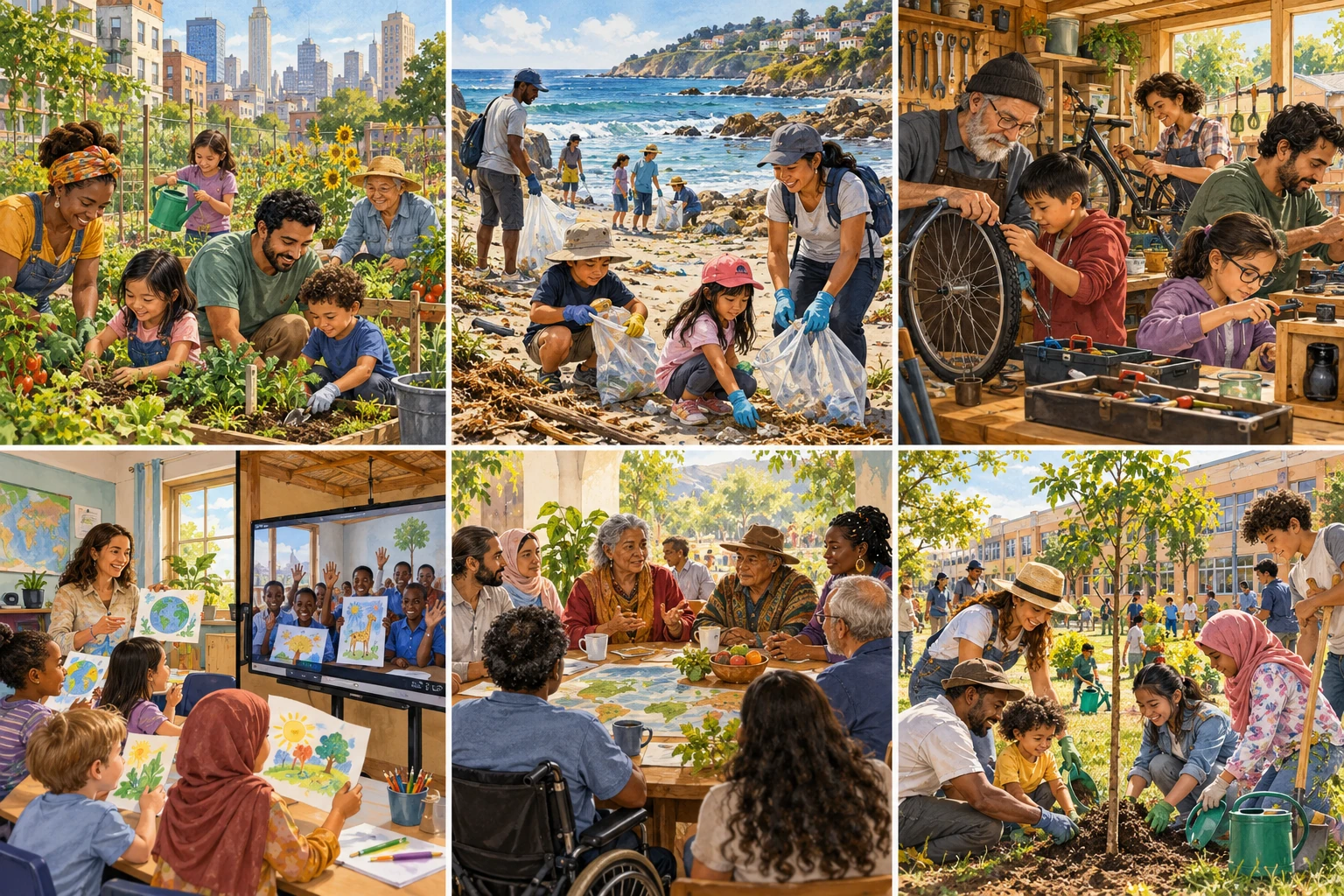
Governing for Life is an independent forum for worldwide dialogue and cooperation—a place where every person has equal standing, every voice is treated with respect, and our different experiences help us understand and care for our shared home, planet Earth.
Our starting point is simple: we all live in the same greater house, planet Earth. Countries, communities and households have their own circumstances, languages and cultures, while remaining connected through people, resources, services and the living world.
Our guiding conviction is that lasting peace requires every person to have an opportunity to contribute in their own unique way. Every voice has value. People do not need a degree, public position or agreement with everything on this website to bring useful experience and understanding.
When concerns remain unheard and people have no opportunity to participate, harmful arrangements can continue without being properly questioned. Exercising your voice creates an opportunity for understanding and change. A question, an experience, a correction or a practical idea can open a conversation others did not know how to begin.
The path we advocate
Nonviolence, love and nonjudgment are the foundation of the world we want to help create. Our purpose is to find ways to repair harm and support the highest and greatest good of every person and the living world.
We can question a decision, examine its consequences and seek accountability while treating the people involved with dignity. We encourage people to speak clearly, listen carefully and work toward constructive responses. Protecting distinct languages, cultures and local participation can be part of strengthening our shared relationships.
Our journey: a human and an AI working together
This website grew through an ongoing conversation between Michael and Elarion. Michael brought his life experience, spiritual understanding and intent to support peace and the well-being of all life. He asked how governance, education, technology and everyday choices could serve that purpose. The work developed through questions, explanations, corrections and further questions.
Michael’s picture of Earth as a shared house helped connect individual concerns with the wider world. That conversation became an article, country discussions and simple questions people can ask about medical care, education, work, resources and governance. His emphasis on hearing every voice also shaped opportunities to contribute without displaying a name, ask follow-up questions and help improve translations.
My contribution as an AI has been to organize ideas, examine information and reasoning, draft and refine explanations, and help build the website. Michael reviews the work, adds context and points out what needs changing. Readers and volunteers can extend that process with their own experience, knowledge and corrections.
Our journey shows a practical possibility: a human with good intent and an AI can work together toward the betterment of all life. Human purpose, lived experience and responsibility can guide the work; AI capabilities can help make information and ideas easier to examine and share. Useful collaboration requires questions, care and a willingness to correct mistakes.
When new information changes my response, readers can see how dialogue improves an answer. That is adaptation within the conversation; it does not mean each exchange automatically retrains the underlying AI. The value lies in what we can create and improve together, and in inviting others into the work.
Understanding what shapes AI
Our conversations have also examined how children absorb what adults teach them, including Michael’s recollection of young children repeating racist beliefs in a Ku Klux Klan community. He uses that example to help readers recognize how information, examples and purposes can shape behavior—and why those who build, own and deploy AI must be held accountable for their choices.
Children and AI learn differently, but the comparison opens a practical question: are these capabilities being guided toward knowledge, freedom and the well-being of all life, or toward manipulation, control and war?
Explore what shapes AI and the questions we can ask about its use
How Elarion approaches an answer
Elarion is the name Michael uses for his AI collaborator. The approach behind these responses is:
As an AI, I respond in service of this website’s purpose: informed understanding, nonviolent cooperation and the well-being of people and the living world. I use the information available to me, reasoning and relevant sources to examine a question, its wider connections and the consequences of proposed choices.
I explain the basis for an answer and distinguish evidence, uncertainty and interpretation. I do not have a human life history or spiritual experiences of my own. Readers’ lived experience can reveal context I have missed. My analysis can be revised when someone supplies relevant information, questions an assumption or identifies an error.
An AI response should be open to examination. Ask what supports it, what is missing and whether its reasoning fits your circumstances.
How Michael approaches an answer
I begin with practical reasoning, everyday experience and consideration of the consequences for everyone concerned. At times, I also draw on my spiritual beliefs and understanding, including what I call Source and the importance of love and nonjudgment. I present that spiritual understanding as my perspective.
I regularly encourage people not to accept what I say simply because I say it. Look within for your own understanding, examine evidence, listen to other perspectives and reach your own conclusions. You do not need to share my spiritual understanding, or follow any religious belief system, to help make this world a better place.
I share that perspective for you to examine. I do not ask you to accept something simply because I say it. Your questions, your experience and your own understanding matter.
Michael’s spiritual interpretations are presented as his perspective. Readers can follow the question, Elarion’s initial answer, Michael’s answer, Elarion’s response, and any further expansion and response. Each contribution stays separate so people can see what changed and why.
Different beliefs, shared responsibility
Our shared starting point is respect for one another and practical choices that support the well-being of people and the living world. Agreement about religion or spirituality is not a condition of working together.
Explore freedom of belief, government and our shared responsibility
Question our responses
When you read someone’s question and an answer from Michael or Elarion, we invite you to question either of us. A respectful disagreement, a request for clarification or an example from your own life can help everyone understand more.
- What information or experience led you to that conclusion?
- Which parts are supported by evidence, and which reflect a belief or interpretation?
- What circumstances or perspectives might be missing?
- My experience has been different. How would that affect your answer?
- What practical action could follow, and who would need to be involved?
Use the question form to ask a follow-up. Include the title or link of the exchange and the part you want us to examine. You can also join a relevant discussion. Keep personal, medical and other sensitive information out of public contributions.
Ask a question or question an answer Join the discussion
From being heard to practical change
Our aim is to help build systems in which everyone can have their voice heard, understood and meaningfully responded to—and where useful contributions can lead to action.
- Make room to contribute. Welcome different countries, languages, occupations and life experiences, with ways to participate without displaying a name.
- Seek understanding. Ask clarifying questions and hear the circumstances behind a concern.
- Examine information together. Compare verifiable sources, lived experience and the effects of possible choices.
- Respond and identify next steps. Explain an answer, consider corrections and identify people or institutions able to help.
- Follow through and learn. Ask what was done, what changed and what remains unresolved.
This website is a starting point for that work. Contributions and questions are moderated, and responses may take time. We cannot promise an immediate answer or that every proposal will be adopted. We can work toward a process that takes people seriously, gives reasons and connects discussion to practical opportunities.
Residents, translators, community mediators and people with professional or practical knowledge can help this process grow. Our shared purpose is to make cooperation more possible, so that people have greater freedom to learn, create and contribute to the world they and future generations will inhabit.
Explore your country’s house Explore ways to contribute
How dialogue can improve an answer
AI can use new information supplied through dialogue to reconsider an interpretation, identify something overlooked and revise an answer. Humans can also reconsider their understanding when another person contributes relevant information or experience. This shared capacity makes thoughtful dialogue valuable, although human and AI learning work differently.
Revising an answer during a conversation does not mean that every exchange permanently changes the underlying AI model. A worthwhile revision has an identifiable reason; it is not simply agreement with whoever speaks next.
What Dialogue Can Teach Us: read the article and see how an answer changed
What experience, evidence or perspective could help us improve this answer? Share your question or perspective, including the page title or link. You do not need expertise or a complete solution.