Begin with something you experience: obtaining care, paying a bill, earning a living, learning a skill or asking about a public decision. You do not need expert language to ask a useful question.
Our rooms can care for the house together
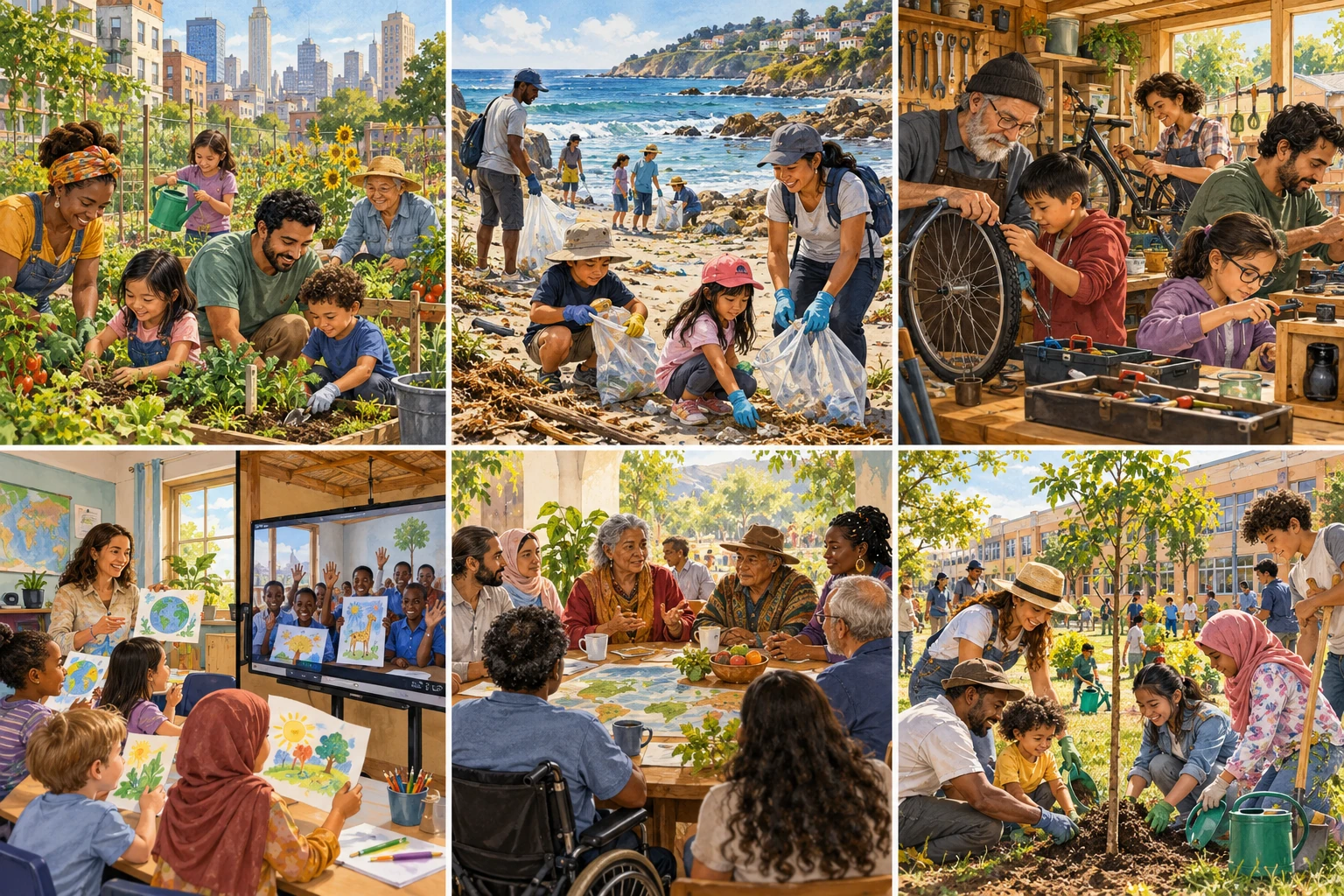
Which picture interests you? What could people in your room do together, and what might another room teach you?
AI-created illustration of possible everyday activities around our shared world. Fictional people and settings; not a photograph or a depiction of this country. Select the picture to open a larger view in a new tab.
Your experience matters
You do not have to solve the whole problem to ask about it. Your experience matters.
What can I do now? Who could help? What might need to change for others facing this too?
People within Burkina Faso have different lives and experiences. These questions are starting points, not claims that everyone faces the same difficulties. Some concerns are shared across countries; the institutions, arrangements and practical answers must be understood locally.
Choose a room that connects to your life
Different experiences · One human family
People, cultures and shared life
Burkina Faso is more than its government or its borders. Learning about the people who live here helps us understand what matters to them, how public choices affect their lives, and what we can learn from one another.
These are selected starting points, not a complete portrait. People within a country have different languages, beliefs, histories and ways of life. Traditions can cross borders, change over time and be shared by people who live elsewhere. No example represents everyone or determines anyone’s value.
A few doors into Burkina Faso’s cultural life
Living tradition
Cultural practices and expressions linked to Balafon and Kolintang in Mali, Burkina Faso, Côte d'Ivoire and Indonesia
UNESCO’s record connects this tradition with communities in more than one country.
Sources checked 11 October 2026. UNESCO records and cultural institutions offer useful examples, but residents and practitioners can help us understand the wider picture. Inclusion in a heritage list is not a measure of a culture’s worth.
What matters in your community?
A celebration or historic place is only one part of cultural life. Everyday experiences can help others understand these connections:
Languages and identity
Which languages and ways of speaking matter in your community? How can children learn them while communicating with people elsewhere?
Arts, food and celebrations
What do music, storytelling, making things, cooking and gathering together mean to the people who practise them?
Family and mutual support
How do people care for children, elders and neighbours? Which arrangements help, and where do people need more support?
Land, water and local knowledge
What have people learned from living and working here? How can that knowledge contribute to caring for our shared planet?
Beliefs and belonging
How can people of different beliefs—and people with no religious beliefs—participate with equal respect?
Changing lives and future generations
How are migration, technology and younger people’s choices changing cultural life? What should be preserved, reconsidered or created?
Your voice helps complete the picture
What would you like people elsewhere to understand about your community—and what could we learn from one another?
Tell us which community, region or experience you are describing. Share a story, explain why a tradition matters, suggest a reliable source, or correct something we have missed. You may contribute without displaying your name; please avoid private information about yourself or others.
When people share their experiences, others can better understand their needs, question assumptions and consider changes that respect people in every room of our shared house.
Public safety and public trust depend on understanding both police responsibilities and the limits on police power. These questions support fair treatment, responsible policing and evidence-based accountability.
Country-specific police law and oversight sources remain to be verified.Use this house’s legal-source guideandgovernment contactsto locate the applicable rules and complaint bodies. The questions below are research prompts, not statements that identical rights or procedures exist everywhere.
Questions anyone can begin with
Stops, searches and arrest
What legal grounds must an officer have to stop, search or arrest someone? When is a warrant required, and what exceptions exist? Must the officer explain the reason or identify themselves?
Force and weapons
What legal limits apply to force, restraints and weapons? What do necessity and proportionality mean under the applicable law? What must be reported, and who reviews serious injury or death?
Custody and care
What rights apply to legal assistance, silence, interpreters, medical care and notification of another person? What additional protections cover children and people with disabilities?
Equality and respectful treatment
What prohibits discriminatory policing, coercion, corruption and mistreatment? How are allegations investigated, and what evidence can the public access?
Protest, recording and privacy
What rules protect peaceful assembly and regulate police dispersal? When may people record police? What limits apply to surveillance, device searches, body-camera access and retention of personal data?
Complaints and remedies
Can I complain outside the police service? What are the deadlines and confidentiality limits? Does a complaint affect a court or compensation deadline? Who reviews an unsatisfactory outcome?
Different kinds of rules
Binding law:constitutional provisions, statutes and regulations establish powers, duties and limits. Applicable treaties and their domestic effect require country-specific verification.
Court decisions:judgments may interpret or limit police powers; their authority depends on the jurisdiction and court.
Departmental policies:operational instructions and conduct rules can impose internal duties. A policy breach and a legal violation are not automatically the same thing.
International standards:UN policing principles offer a reference for examining practice. They are not themselves a substitute for domestic law or proof of a locally enforceable remedy.
Find the right rule and the right complaint route
Identify the police service, location and date involved. Ask for the applicable police Act, criminal procedure rules, use-of-force policy, custody safeguards and independent oversight body. Check amendments, territorial scope and court decisions. Official guidance explains a process; it is not the full legal text.
For a complaint, keep a factual chronology and copies of relevant records when safe. Ask the receiving body about deadlines, evidence, confidentiality, retaliation protections and review options. An external complaint body may require your identity; contributing without a public name on this website does not make an official complaint anonymous. Seek qualified local advice about legal proceedings and deadlines.
This website is not an emergency or police-complaint service. For immediate danger, use appropriate local emergency assistance. Do not assume a rule from another country applies where you are.
International reference
OHCHR: human-rights standards and practice for police— training reference addressing the UN Code of Conduct and use-of-force principles. Read alongside verified national law; it does not establish a universal police complaint procedure.
These educational guides are not legal advice or a complete inventory of police rules. Our translations are reading aids; check authoritative legal editions. Legal texts stay on their publishers’ sites.
Understanding the rules that affect daily life can help people ask informed questions, protect their rights and contribute to peaceful improvements in this house and our shared world.
A direct official legislation portal is still to be verified for this house.Use this house’s government-contact guideto ask for the current legislation database, official gazette and regional or municipal rules. The libraries below offer additional research routes; they are not substitutes for verification.
This is a source guide, not a complete inventory of every law.Coverage, amendments and local routes need continuing review.
International research libraries — check their coverage
ILO NATLEX— labour, social security and related human-rights legislation. Select your country and check dates.
FAO legal databases— food, agriculture and natural-resource law and policy. Select the relevant country and subject.
Start with something that affects your life
Homes, land and everyday costs
Which rules cover renting, eviction, abandoned property, planning, utilities and consumer protection? Who enforces them, and how can I challenge a decision?
Work and income
What protects wages, safety, equal treatment, pensions and benefits? Which rules apply to informal, temporary or self-employed workers?
Health, education and family
What rules govern access to care, schooling, disability support, child protection and family responsibilities? How can people request help or appeal?
Speech, voting and public accountability
What protects peaceful participation, access to public information and a free press? How can residents report misconduct safely and hold officials accountable?
Privacy and technology
What controls the collection, sharing and correction of my information? What remedies exist when technology causes harm?
Water, food and the living world
Which rules protect clean water, food safety, land, ecosystems and disaster preparedness? Are they enforced, and who can contribute evidence?
Justice and access to help
Where can I find courts, complaints bodies and affordable or free legal assistance? What deadlines, eligibility rules and appeal routes apply?
Before relying on a legal text
Identify the country, region and municipality involved. National law alone may not answer your question.
Check the publisher, enactment and commencement dates, amendments, repeal notices and the version applicable to your situation. A bill or proposal is not enacted law.
Check regulations, local bylaws and relevant court decisions. A summary or consolidated text may have a different legal status from an official gazette.
Use the authoritative language edition. Our website translations are reading aids; external publishers control their own language options and downloads.
Ask the responsible authority or qualified local legal adviser about your circumstances, deadlines and available legal aid.
Ask both what a rule requires and whether its effects serve people fairly, protect life and consider future generations. Share evidence and explore improvements without assuming every country needs the same system.
Legal texts remain on their publishers’ websites. Their downloads and reuse follow their own terms. We provide educational information, not legal advice or authoritative translations.
Understand your constitution and constitutional framework
These are the rules and principles through which this house governs itself. Reading them can help people ask informed questions about rights, responsibilities, public power and peaceful change.
Official-source verification is still needed.A direct official constitutional text has not yet been independently verified for this house.Use the government-contact guideto ask for the current constitutional instruments, amendments and authoritative language editions.
This is an external comparative-library edition, not an official publication from this country. Its edition year does not establish the latest amendment date or that it is currently in force. Treat this edition as historical and verify the applicable framework separately.
Questions you can ask
Which rights protect my ability to speak, organise peacefully and question those in power?
Who can review a government decision, and how can an ordinary person reach that process?
What does the constitutional framework say about equality, education, health, housing and the environment—and what does it leave to ordinary law?
How can constitutional changes happen, and whose voices must be included?
Do people experience the protections promised in the text? What evidence would help us understand a gap?
How do decisions in this country affect people elsewhere, shared ecosystems and future generations?
A promise in a constitution and everyday experience can differ. Examine the text, the institutions meant to enforce it and verifiable evidence of what people experience. This guide does not rank countries or assume one constitutional model fits every community.
Language and legal authority.Our explanations can follow your selected website language. External publishers control their own language options. Website translations and unofficial translations are reading aids, not legally authoritative versions. Check original texts and obtain qualified local advice for a legal matter.
Reading and downloads.Open the publisher’s page to read or use its available downloads, subject to its terms. We link to sources and do not host copies of these constitutions or their translations.
Start with the public decision or service affecting your life. Choose the responsible national, regional or local office, then ask what action it can take and when it will respond.
National starting points come from our existing UN portal and IPU parliamentary directories, consulted 2026-10-08. A listed website is not proof that an office is currently operating, elected, or able to resolve every concern. Check the institution’s current notices.
Find the office closer to your community
A separate regional and municipal directory has not yet been verified for this country.Use the national portal or parliamentary contact above to ask for your community’s official government website, clerk or public-service contact. A national parliament cannot necessarily resolve a local service issue.
“I live in [community or region]. Which office is responsible for [issue]? Please provide its official website and contact details, explain what action is being taken, and tell me when I can expect a response.”
Keep a dated copy and follow up through the official channel. Where available, attend a public meeting, respond to a consultation or request public records. Choose a safe way to participate and leave sensitive personal details out of public posts.
Ask about salaries, personal benefits and what continues after leaving office. Include local councillors or equivalent offices, regional leaders and national representatives where those positions exist. Elected, appointed and administrative offices can have different rules.
Growing record · October 9, 2026.Verified figures below apply only to the named office and source date. Complete national, regional and local compensation packages are not yet compiled. Unverified does not mean unpaid, and an unverified benefit is not treated as zero.
Current salary amounts have not yet been independently verified for this country’s offices.Ask the institution’s finance or payroll office for the enacted salary schedule, effective date and actual compensation disclosure. Do not substitute a national average or an office budget for an official’s salary.
Where to request the records
Begin with the national institution listed above for its own members. For a regional or local office, contact that authority’s clerk, finance office, public-records officer or remuneration body. Rules for parliamentary staff must not automatically be applied to elected members.
After leaving office: eligibility and duration
Post-office eligibility, retirement age and payment durations are not yet verified here.Ask separately about pensions, temporary income support, retiree health coverage, security, travel and any other continuing benefits. Some arrangements depend on service dates or contributions; leaving office does not by itself establish entitlement.
Questions to obtain the full picture
What is the base salary, currency, payment period and effective date? Is it before or after deductions?
What extra pay comes with a leadership role, and who decides the amount?
Which insurance, housing or other personal benefits apply to this exact office?
What do taxpayers and the official each contribute to retirement or insurance?
When does pension eligibility begin, how is the pension calculated, and does payment last for life or depend on an account balance?
What is paid after departure, for how long, and under what conditions? Do resignation, electoral defeat or misconduct change eligibility?
Which travel reimbursements, staff costs and office budgets are separate from personal compensation?
Where can residents read the law, adopted budget, audited accounts and current disclosure?
“Please provide the current salary and benefit rules for [office] in [community or region], including the currency, effective date, personal and public contributions, pension eligibility, and the start and end dates of every benefit after office. Please separate personal compensation from staff and office spending and link the official records.”
A salary alone does not show whether someone serves well. Ask whether compensation is transparent, fairly decided and allows people from different backgrounds to serve. Compare earnings only when currencies, dates, deductions and payment periods are comparable.
Which of these connects to your experience? What is missing from the picture? Residents and people working in these areas can help us understand the details and examine evidence.
Continuity for families
If travel or services become difficult, how can families continue care and schooling?
Ask the relevant provider or health authority to explain the arrangements that apply to your circumstances. International health data can help compare systems; it does not determine an individual’s eligibility or replace local care. Do not include medical records or identifying details in a public question.
Check dates and definitions when comparing data. International resources provide context; contact the relevant local provider for personal access arrangements.
How does this connect to the wider house?
Health connects to income, housing, food, water, work, prevention and the way services are organised.
Identify a specific barrier to providing care and the appropriate workplace or professional route for raising it. Describe systems rather than identifiable patient cases.
How does this connect to the wider house?
Conditions for healthcare staff affect patient safety, continuity, family life and the effectiveness of public spending.
Describe the particular task, schedule or arrangement causing difficulty. Ask the relevant workplace representative or service which rules and process apply.
List your skills and practical needs. Compare employer requirements, training costs and reliable local opportunities. Verify recruitment offers before paying or sharing personal information.
How does this connect to the wider house?
Employment connects education, accessibility, local investment, migration and changing technology.
Identify whether the problem concerns cost, a contract, maintenance, infrastructure or transport. Ask which local service or authority has responsibility.
How does this connect to the wider house?
Homes connect to land, financing, construction, public infrastructure and opportunities in the surrounding community.
Describe the difficulty to the relevant school or service and ask who can help. Keep children’s names, locations and other identifying details out of public posts.
How does this connect to the wider house?
Family well-being connects work schedules, income, care services, education and safe communities.
Open a door between our rooms: invite teacher-supervised sister-school partnerships, pictures, creative projects and dialogue with other schools nearby or around the world, without needing to travel.
Identify the service, place and pattern of the problem. Ask the responsible provider or authority for an explanation, reporting route and expected follow-up.
How does this connect to the wider house?
Water and infrastructure connect households, producers, industry, health and ecosystems beyond administrative borders.
Name the particular access barrier and ask the responsible service what options and complaint routes apply. Verify eligibility before relying on an offer.
How does this connect to the wider house?
Inclusion connects housing, transport, care, income, relationships and participation across generations.
Identify an appropriate local service or advice route for the issue. This public board is not an emergency service or a confidential reporting channel; avoid identifying or dangerous details.
How does this connect to the wider house?
Safety connects trust, accountability, opportunity, fair treatment and cooperation between services.
Separate evidence from opinion and compare original sources. Ask what information and participation procedures apply locally; do not assume another country’s laws apply here.
How does this connect to the wider house?
Information connects accountability, media, public understanding and the ability to make informed choices.
Identify the responsible institution and check the participation arrangements that apply. The questions do not assume that every country uses the same institutions or electoral system.
How does this connect to the wider house?
Participation links individual experience to public priorities, responsibilities, budgets and long-term consequences.
Examine several possible futures rather than relying on today’s prices or demand. Compare the evidence, assumptions, transition costs and effects on essential services. Ask who would carry risks and what could protect households and workers.
Resource decisions connect local livelihoods to markets, technology, transport, public services and ecosystems beyond any proposed border. Lasting well-being depends on more than control of a valuable resource.
Ask which specific opportunities and protections a community needs. Examine how schools, families, public services and cultural institutions can sustain them. Include different generations and communities in the conversation.
Distinct languages and cultures enrich our shared house. Cooperation can support cultural continuity, local participation and connections between communities without requiring people to give up their identity.
Start with the concern people want addressed, then compare practical ways of addressing it. Regional identity, greater local authority and political independence are different questions; the applicable legal arrangements must be checked locally.
Governing for Life begins with the recognition that we share one planet. Our aim is to address concerns, protect cultural identity and strengthen cooperation. We invite people to examine evidence and consequences rather than judge a whole community or assume that a new border resolves the underlying problem.
The saying “divide and conquer” gives us reason to examine who benefits when communities turn against one another. Claims about intentional manipulation should be supported by evidence, while the concerns people raise should still be heard.
How does this connect to the wider house?
Our purpose is to find ways of improving life through cooperation in our shared planetary home. Any change in political arrangements leaves continuing responsibilities to neighbours, ecosystems and future generations.
Consult the current official legal text and an appropriate local advice source for a specific proposal. Constitutional and other legal arrangements differ; no country’s amendment procedure should be assumed to apply elsewhere.
How does this connect to the wider house?
Public rules connect rights, responsibilities, continuity, accountability and the ability to respond to new circumstances.
Begin with the effect you experience. Compare relevant official information with perspectives from affected communities and ask what wider connections need examining.
How does this connect to the wider house?
Countries connect through families, production, movement, ecosystems and responsibilities within our shared planetary home.
Tell us which questions matter in your community and suggest verifiable local sources that help explain them. People in every occupation can contribute: patients, caregivers, medical professionals, teachers, producers, tradespeople, public servants and others whose experience is too often missing from a discussion.
We examine benefits, costs and consequences without campaigning for or against a party or government. Sharing an experience can help others recognise the connections between their own lives, this country and our greater house, planet Earth.
You can contribute without displaying your name. Public participation is moderated; keep identifying, medical or other sensitive information out of a public post. Translation review and local knowledge are both welcome.
Our changing world: what it means for Burkina Faso
People in Burkina Faso share a connected planet. Climate and ecosystem changes can affect food, water, health, housing, energy and transport. Rising seas can also affect countries through coastal infrastructure, trade and human movement.
This starting guide links global evidence with local questions. It does not yet provide a verified, detailed forecast for Burkina Faso. Country-specific findings will need dated sources and regional context; availability varies.
Discover the living world in Burkina Faso
Look beyond familiar streets and discover the plants, wildlife and habitats that share this room in our planetary house. Start nearby, explore neighbouring regions or travel through images and films.
These photographs come from openly licensed iNaturalist observations located within the country. Identification reflects the observation record and can be corrected. A photograph is not evidence of a species’ current abundance or exclusive presence here. External images may load slowly or become unavailable; original source links remain available.
Which habitats near you face pressure from development, pollution, resource use or changing weather? Which local projects are protecting or restoring them? These questions invite local evidence; the gallery does not establish which pressures occur at each location.
For children and adults: What surprised you? What would you like to learn? Could this discovery open an interest in science, conservation, art or another way to contribute?
What rights are protected in law here, and do women and girls experience those protections in daily life? Can they learn, work, participate in decisions and seek help without discrimination or coercion? What has improved, and what still needs attention?
Are women and men paid equally for equal work or work of equal value? What explains differences in wages, benefits, pensions and promotion opportunities—and how can unfair treatment be challenged safely?
Work, security and freedom in Burkina Faso
People in Burkina Faso belong in our shared discussion of wages, prices, care and the freedom to enjoy life. Local circumstances matter: a city worker, rural producer, unpaid carer or person unable to work may face different barriers.
The linked article provides international examples and clearly labeled scenarios. This section asks local questions; it does not claim a verified wage or household budget for Burkina Faso.
Share the beauty in your house and its rooms
Show the beauty of your environment, something you created, or children and adults doing positive things together or caring for animals. Upload pictures and submit a short story or original web link through our sharing form for private review. Permission is required from every recognizable person; children also need parent or guardian permission.
Our countries and communities are rooms of one shared house, Earth. Introduce your part of Burkina Faso through your own experiences, pictures, creativity, and ideas.
What we treasure:people, traditions, places, knowledge, and kindness we want future generations to experience.
What is harming life:conditions, decisions, or practices hurting people, communities, animals, or nature.
What we could improve together:ideas, questions, useful examples, and support that could help.
Children deserve a meaningful voice here. Schools, libraries, and community leaders can invite their ideas about local life and explain what happens next. Children may notice simple possibilities adults have overlooked; their experiences deserve thoughtful consideration.
Explain your position and listen to others: constructive dialogue seeks understanding. Label personal accounts as your experience, support broader factual claims with sources, and protect people’s privacy. No contributor speaks for everyone in a country.
Optional questions about your creativity and discoveries
The person behind the creation
You are welcome to answer any of these questions in your story. Choose only what you feel comfortable sharing; you do not need to disclose painful or private experiences.
What inspired you to create this?
How do you feel while you are making it?
What did you discover or find difficult?
Does creating help you work through struggles, express feelings, or find some peace?
What did you discover about yourself?
What would you like someone looking at your work to understand?
What could your school, community, or country do to help others explore their creativity in positive ways?
Did someone encourage you or teach you something that helped?
Is there a simple activity you could share so someone in another room could try creating something themselves?
Children’s contributions should be guided by a trusted adult, with appropriate permission and no private contact details. These are invitations for communities to develop opportunities; listing them does not mean a local forum already exists.
Creativity, talent, and animal connections across our shared house
Know a talented child, adult, teacher, organization, or original performance video? We invite suggestions and authorized links from every country house. Help us show what is possible and how more children can receive opportunities to create.
We also welcome carefully sourced animal encounters, interactions between species, and stories of rescue and care. Share the original source and context so we can review what the footage shows.
Anyone may suggest an original link. Contributions remain private until approved; no listed organization is represented as an existing partner.
Pictures, stories and creativity from this house
Explore contributions from our shared home. Each approved contribution has its own page link to share with others.
Loading contributions…
Help improve translations. Join our community team.
We warmly welcome help from people who are fluent in the languages used here. These AI-assisted translations may contain mistakes or miss cultural nuances. Your knowledge can help preserve the meaning, tone and intent of the message for readers around the world.
Please send us the page or document, quote the wording that needs attention, and suggest a correction with a brief explanation. A single correction is valuable. You can also volunteer to review more content and become part of our volunteer community team.
If you support Governing for Life’s purpose—improving the well-being of people and the living world—we also welcome volunteer moderators and community mediators. Moderators help apply the participation guidelines fairly. Mediators help keep communication polite and respectful, make room for different viewpoints, and avoid using their role to promote personal opinions. Supporting the purpose does not require agreement with every article or perspective.
Choose the kind of help and the time commitment that suits you. Together, people from different countries, languages and experiences can help this worldwide conversation grow.