Community and cultural resource
Sierra Leone National Museum
The Ministry of Tourism and Cultural Affairs introduces the national museum as a resource for exploring the country’s heritage.
Explore the source and learn moreOur Shared House · Sierra Leone
Begin with something you experience: obtaining care, paying a bill, earning a living, learning a skill or asking about a public decision. You do not need expert language to ask a useful question.
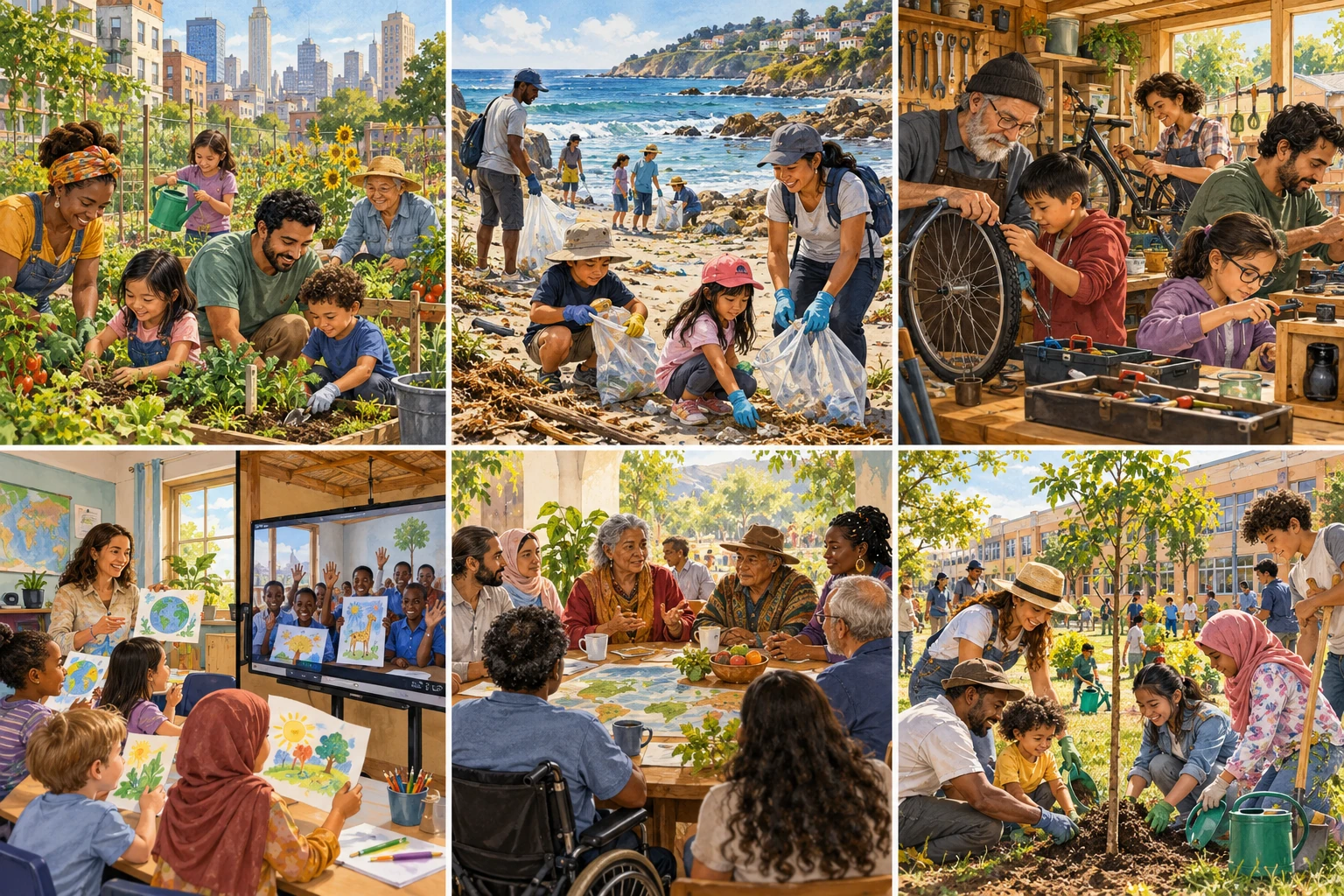
Which picture interests you? What could people in your room do together, and what might another room teach you?
AI-created illustration of possible everyday activities around our shared world. Fictional people and settings; not a photograph or a depiction of this country. Select the picture to open a larger view in a new tab.You do not have to solve the whole problem to ask about it. Your experience matters.
What can I do now? Who could help? What might need to change for others facing this too?
Medical care questions Ask your own question Explore another country
People within Sierra Leone have different lives and experiences. These questions are starting points, not claims that everyone faces the same difficulties. Some concerns are shared across countries; the institutions, arrangements and practical answers must be understood locally.
Different experiences · One human family
Sierra Leone is more than its government or its borders. Learning about the people who live here helps us understand what matters to them, how public choices affect their lives, and what we can learn from one another.
These are selected starting points, not a complete portrait. People within a country have different languages, beliefs, histories and ways of life. Traditions can cross borders, change over time and be shared by people who live elsewhere. No example represents everyone or determines anyone’s value.
Community and cultural resource
The Ministry of Tourism and Cultural Affairs introduces the national museum as a resource for exploring the country’s heritage.
Explore the source and learn moreSources checked 11 October 2026. UNESCO records and cultural institutions offer useful examples, but residents and practitioners can help us understand the wider picture. Inclusion in a heritage list is not a measure of a culture’s worth.
A celebration or historic place is only one part of cultural life. Everyday experiences can help others understand these connections:
What would you like people elsewhere to understand about your community—and what could we learn from one another?
Tell us which community, region or experience you are describing. Share a story, explain why a tradition matters, suggest a reliable source, or correct something we have missed. You may contribute without displaying your name; please avoid private information about yourself or others.
When people share their experiences, others can better understand their needs, question assumptions and consider changes that respect people in every room of our shared house.
Ask or share a cultural question Join the shared conversation Suggest a source or correction
Public safety and public trust depend on understanding both police responsibilities and the limits on police power. These questions support fair treatment, responsible policing and evidence-based accountability.
Country-specific police law and oversight sources remain to be verified. Use this house’s legal-source guide and government contacts to locate the applicable rules and complaint bodies. The questions below are research prompts, not statements that identical rights or procedures exist everywhere.
What legal grounds must an officer have to stop, search or arrest someone? When is a warrant required, and what exceptions exist? Must the officer explain the reason or identify themselves?
What legal limits apply to force, restraints and weapons? What do necessity and proportionality mean under the applicable law? What must be reported, and who reviews serious injury or death?
What rights apply to legal assistance, silence, interpreters, medical care and notification of another person? What additional protections cover children and people with disabilities?
What prohibits discriminatory policing, coercion, corruption and mistreatment? How are allegations investigated, and what evidence can the public access?
What rules protect peaceful assembly and regulate police dispersal? When may people record police? What limits apply to surveillance, device searches, body-camera access and retention of personal data?
Can I complain outside the police service? What are the deadlines and confidentiality limits? Does a complaint affect a court or compensation deadline? Who reviews an unsatisfactory outcome?
Identify the police service, location and date involved. Ask for the applicable police Act, criminal procedure rules, use-of-force policy, custody safeguards and independent oversight body. Check amendments, territorial scope and court decisions. Official guidance explains a process; it is not the full legal text.
For a complaint, keep a factual chronology and copies of relevant records when safe. Ask the receiving body about deadlines, evidence, confidentiality, retaliation protections and review options. An external complaint body may require your identity; contributing without a public name on this website does not make an official complaint anonymous. Seek qualified local advice about legal proceedings and deadlines.
This website is not an emergency or police-complaint service. For immediate danger, use appropriate local emergency assistance. Do not assume a rule from another country applies where you are.
OHCHR: human-rights standards and practice for police — training reference addressing the UN Code of Conduct and use-of-force principles. Read alongside verified national law; it does not establish a universal police complaint procedure.
These educational guides are not legal advice or a complete inventory of police rules. Our translations are reading aids; check authoritative legal editions. Legal texts stay on their publishers’ sites.
Explore police responsibilities and rights across all houses · Suggest an official source or correction · Ask a question
Understanding the rules that affect daily life can help people ask informed questions, protect their rights and contribute to peaceful improvements in this house and our shared world.
A direct official legislation portal is still to be verified for this house. Use this house’s government-contact guide to ask for the current legislation database, official gazette and regional or municipal rules. The libraries below offer additional research routes; they are not substitutes for verification.
This is a source guide, not a complete inventory of every law. Coverage, amendments and local routes need continuing review.
Which rules cover renting, eviction, abandoned property, planning, utilities and consumer protection? Who enforces them, and how can I challenge a decision?
What protects wages, safety, equal treatment, pensions and benefits? Which rules apply to informal, temporary or self-employed workers?
What rules govern access to care, schooling, disability support, child protection and family responsibilities? How can people request help or appeal?
What protects peaceful participation, access to public information and a free press? How can residents report misconduct safely and hold officials accountable?
What controls the collection, sharing and correction of my information? What remedies exist when technology causes harm?
Which rules protect clean water, food safety, land, ecosystems and disaster preparedness? Are they enforced, and who can contribute evidence?
Where can I find courts, complaints bodies and affordable or free legal assistance? What deadlines, eligibility rules and appeal routes apply?
Ask both what a rule requires and whether its effects serve people fairly, protect life and consider future generations. Share evidence and explore improvements without assuming every country needs the same system.
Legal texts remain on their publishers’ websites. Their downloads and reuse follow their own terms. We provide educational information, not legal advice or authoritative translations.
Explore laws guides in all 199 houses · Ask a question · Suggest an official source or correction
These are the rules and principles through which this house governs itself. Reading them can help people ask informed questions about rights, responsibilities, public power and peaceful change.
Official-source verification is still needed. A direct official constitutional text has not yet been independently verified for this house. Use the government-contact guide to ask for the current constitutional instruments, amendments and authoritative language editions.
Read the 2022 reference edition on Constitute · Available reference languages: en.
This is an external comparative-library edition, not an official publication from this country. Its edition year does not establish the latest amendment date or that it is currently in force. Check for later amendments, replacement texts and transitional rules before relying on it.
A promise in a constitution and everyday experience can differ. Examine the text, the institutions meant to enforce it and verifiable evidence of what people experience. This guide does not rank countries or assume one constitutional model fits every community.
Language and legal authority. Our explanations can follow your selected website language. External publishers control their own language options. Website translations and unofficial translations are reading aids, not legally authoritative versions. Check original texts and obtain qualified local advice for a legal matter.
Reading and downloads. Open the publisher’s page to read or use its available downloads, subject to its terms. We link to sources and do not host copies of these constitutions or their translations.
Compare constitutional frameworks across our shared world · Ask a question · Suggest an official source or correction
Start with the public decision or service affecting your life. Choose the responsible national, regional or local office, then ask what action it can take and when it will respond.
National starting points come from our existing UN portal and IPU parliamentary directories, consulted 2026-10-08. A listed website is not proof that an office is currently operating, elected, or able to resolve every concern. Check the institution’s current notices.
A separate regional and municipal directory has not yet been verified for this country. Use the national portal or parliamentary contact above to ask for your community’s official government website, clerk or public-service contact. A national parliament cannot necessarily resolve a local service issue.
“I live in [community or region]. Which office is responsible for [issue]? Please provide its official website and contact details, explain what action is being taken, and tell me when I can expect a response.”
Keep a dated copy and follow up through the official channel. Where available, attend a public meeting, respond to a consultation or request public records. Choose a safe way to participate and leave sensitive personal details out of public posts.
Suggest a current official contact or correction · Prepare a clear message
Ask about salaries, personal benefits and what continues after leaving office. Include local councillors or equivalent offices, regional leaders and national representatives where those positions exist. Elected, appointed and administrative offices can have different rules.
Growing record · October 9, 2026. Verified figures below apply only to the named office and source date. Complete national, regional and local compensation packages are not yet compiled. Unverified does not mean unpaid, and an unverified benefit is not treated as zero.
Current salary amounts have not yet been independently verified for this country’s offices. Ask the institution’s finance or payroll office for the enacted salary schedule, effective date and actual compensation disclosure. Do not substitute a national average or an office budget for an official’s salary.
Begin with the national institution listed above for its own members. For a regional or local office, contact that authority’s clerk, finance office, public-records officer or remuneration body. Rules for parliamentary staff must not automatically be applied to elected members.
Post-office eligibility, retirement age and payment durations are not yet verified here. Ask separately about pensions, temporary income support, retiree health coverage, security, travel and any other continuing benefits. Some arrangements depend on service dates or contributions; leaving office does not by itself establish entitlement.
“Please provide the current salary and benefit rules for [office] in [community or region], including the currency, effective date, personal and public contributions, pension eligibility, and the start and end dates of every benefit after office. Please separate personal compensation from staff and office spending and link the official records.”
A salary alone does not show whether someone serves well. Ask whether compensation is transparent, fairly decided and allows people from different backgrounds to serve. Compare earnings only when currencies, dates, deductions and payment periods are comparable.
Help verify an official compensation record · Explore another country’s public-service guide · Return to government contacts
Which of these connects to your experience? What is missing from the picture? Residents and people working in these areas can help us understand the details and examine evidence.
What would help communities retain medical staff and maintain necessary equipment?
Ask this questionCan local training connect young people to useful work and safer production?
Ask this questionWho benefits from resource projects, and can affected residents examine the costs and benefits?
Ask this questionHow can public revenue support healthcare, education and dependable services?
Ask this questionWhat would help workers and communities prepare for changes in demand without losing their livelihoods?
Ask this questionHow can I get the medical care I need without putting my household in hardship?
Ask this questionWho can explain my eligibility, coverage, treatment costs and referral options?
Ask this questionWhat can I do when appointments, transport or waiting arrangements prevent timely care?
Ask this questionHow can I obtain prescribed medicines and understand their costs without interrupting treatment?
Ask this questionAre preventive care, dental care, rehabilitation and continuing treatment accessible?
Ask this questionHow can people obtain mental-health support with dignity and privacy?
Ask this questionCan care respect disability access, language, age and cultural needs?
Ask this questionHow can patients raise a concern about safety or treatment and receive a clear response?
Ask this questionWhat would make essential care accessible to everyone, not only those able to pay?
Ask this questionAsk the relevant provider or health authority to explain the arrangements that apply to your circumstances. International health data can help compare systems; it does not determine an individual’s eligibility or replace local care. Do not include medical records or identifying details in a public question.
WHO country health data directory · Explore access to essential care and financial protection
Check dates and definitions when comparing data. International resources provide context; contact the relevant local provider for personal access arrangements.
Health connects to income, housing, food, water, work, prevention and the way services are organised.
What would help us provide good care without becoming exhausted?
Ask this questionAre staffing, equipment, medicines and referral arrangements adequate for the work expected of us?
Ask this questionCan we raise safety concerns through an appropriate route and see that they are addressed?
Ask this questionWhat training, supervision and practical support would improve care?
Ask this questionCan useful technology reduce avoidable paperwork while protecting patients and professional judgement?
Ask this questionHow can smaller communities retain health workers without weakening care elsewhere?
Ask this questionIdentify a specific barrier to providing care and the appropriate workplace or professional route for raising it. Describe systems rather than identifiable patient cases.
Conditions for healthcare staff affect patient safety, continuity, family life and the effectiveness of public spending.
Why does my income no longer cover the things I need?
Ask this questionWhich charges can I compare or ask a provider to explain?
Ask this questionWhat help might apply to my household, and who can explain the requirements?
Ask this questionWhat would make essentials affordable without shifting costs or harm to others?
Ask this questionList the costs causing difficulty. Ask providers for clear explanations and check the conditions of any assistance or borrowing before relying on it.
Household costs connect to wages, competition, public services, energy and supplies from other places.
What would make my working life safer and more secure?
Ask this questionWhich pay, safety and employment rules apply to my work?
Ask this questionWho can help me understand a workplace concern or find the responsible authority?
Ask this questionIf productivity improves, how can workers share the gains in income or time?
Ask this questionDescribe the particular task, schedule or arrangement causing difficulty. Ask the relevant workplace representative or service which rules and process apply.
Explore work and labour information through the International Labour Organization
Work connects to health, family life, training, public protections and the distribution of economic gains.
How can I find useful work that fits my abilities and circumstances?
Ask this questionWhich advertised opportunities are genuine, and what skills do they actually require?
Ask this questionCan I compare employment prospects before paying for training?
Ask this questionWhat would help people facing transport, disability or caregiving barriers?
Ask this questionList your skills and practical needs. Compare employer requirements, training costs and reliable local opportunities. Verify recruitment offers before paying or sharing personal information.
Employment connects education, accessibility, local investment, migration and changing technology.
Why is a suitable home or dependable journey so difficult to obtain?
Ask this questionWho can explain a rental, repair, land or housing concern?
Ask this questionCan homes connect people to work, schools, care and public transport?
Ask this questionHow can neighbourhood decisions consider costs, safety, accessibility and valued natural spaces together?
Ask this questionIdentify whether the problem concerns cost, a contract, maintenance, infrastructure or transport. Ask which local service or authority has responsibility.
Homes connect to land, financing, construction, public infrastructure and opportunities in the surrounding community.
How can my family get support before a difficulty becomes a crisis?
Ask this questionCan caregivers and educators discuss a child’s needs without blame?
Ask this questionWhat would make childcare and support for dependent relatives more accessible?
Ask this questionHow can children have a safe way to raise concerns and be taken seriously?
Ask this questionDescribe the difficulty to the relevant school or service and ask who can help. Keep children’s names, locations and other identifying details out of public posts.
Family well-being connects work schedules, income, care services, education and safe communities.
Open a door between our rooms: invite teacher-supervised sister-school partnerships, pictures, creative projects and dialogue with other schools nearby or around the world, without needing to travel.
Find school directories and education contact routes for Sierra Leone · Explore the supervised exchange proposal
What would help people learn and discover useful abilities throughout life?
Ask this questionDo learners have materials, connectivity, meals and the support they need?
Ask this questionCan teachers raise concerns about resources, workload and student needs constructively?
Ask this questionHow can practical trades, creative interests and adult learning receive support alongside academic study?
Ask this questionBegin with a specific barrier. Ask learners, families, educators and relevant services what would help and how progress could be assessed.
Explore UNICEF’s education resources
Learning connects opportunities, public investment, personal interests, practical skills and informed participation.
What would help my work serve the community and remain viable?
Ask this questionAre fees, permits, taxes and payment terms understandable?
Ask this questionCan smaller suppliers compete fairly and be paid on time?
Ask this questionHow can independent or informal workers obtain greater security without losing a livelihood first?
Ask this questionIdentify the particular cost or process causing difficulty. Ask the responsible office for the applicable requirements and compare reliable advice.
Enterprise connects useful work, finance, regulation, public purchasing and the needs of the surrounding community.
Can practical skills help us keep useful things working and waste less?
Ask this questionWhat prevents a useful item from being repaired?
Ask this questionCan tradespeople obtain training, safe equipment and fair payment?
Ask this questionHow can residents understand quality, safety and written terms before paying for work?
Ask this questionStart with a particular repair or skill need. Compare providers and requirements, and ask how training or shared tools could help locally.
Repair connects household costs, skills, material supplies, product design and environmental impacts.
How can producers earn fairly while families can afford nutritious food?
Ask this questionWhere do costs or losses arise between producer and household?
Ask this questionCan smaller producers influence decisions about land, markets and infrastructure?
Ask this questionHow can production protect soils, water, fisheries and future livelihoods?
Ask this questionDescribe the crop, fishery, supply or food-access problem. Ask producers and relevant services what evidence would clarify its causes.
Explore FAO offices and country work
Food links rural and urban communities, transport, trade, ecosystems and public health.
What would make water and essential local services dependable?
Ask this questionWho is responsible for supply, treatment, drainage, waste collection or infrastructure repairs?
Ask this questionCan residents see how projects and spending priorities are chosen?
Ask this questionHow can household, agricultural and industrial needs be balanced with healthy ecosystems?
Ask this questionIdentify the service, place and pattern of the problem. Ask the responsible provider or authority for an explanation, reporting route and expected follow-up.
Water and infrastructure connect households, producers, industry, health and ecosystems beyond administrative borders.
How can we meet energy needs while protecting health and valued places?
Ask this questionCan homes and businesses reduce waste and costs?
Ask this questionWho benefits from a proposed project, and who bears its impacts?
Ask this questionCan affected communities examine evidence and participate before decisions are made?
Ask this questionBegin with a bill, proposal or local impact you can describe. Ask for clear information about costs, benefits, alternatives and environmental effects.
Energy connects livelihoods, technology, public health, land, climate and responsibilities to future generations.
How can I remain independent and connected to my community?
Ask this questionAre buildings, transport, information and services accessible to me?
Ask this questionWho can explain practical support and the conditions that apply?
Ask this questionCan people receiving support help shape the services they use?
Ask this questionName the particular access barrier and ask the responsible service what options and complaint routes apply. Verify eligibility before relying on an offer.
Inclusion connects housing, transport, care, income, relationships and participation across generations.
How can our community become safer while everyone’s rights are respected?
Ask this questionCan the responsible authority explain how a concern is handled and followed up?
Ask this questionWhat support helps people harmed by an event without exposing them to further harm?
Ask this questionHow can prevention, fair procedures and useful opportunities address causes as well as consequences?
Ask this questionIdentify an appropriate local service or advice route for the issue. This public board is not an emergency service or a confidential reporting channel; avoid identifying or dangerous details.
Safety connects trust, accountability, opportunity, fair treatment and cooperation between services.
How can I find reliable information and ask questions about public choices?
Ask this questionCan I compare original evidence with what a headline or social-media post claims?
Ask this questionWhat would help journalists investigate matters of public interest safely?
Ask this questionCan residents obtain understandable information about spending, decisions and results?
Ask this questionSeparate evidence from opinion and compare original sources. Ask what information and participation procedures apply locally; do not assume another country’s laws apply here.
Information connects accountability, media, public understanding and the ability to make informed choices.
How can residents influence the decisions affecting their daily lives?
Ask this questionWhich institution has responsibility for the issue I am raising?
Ask this questionWhere elections are available, how can I compare verifiable records and proposals?
Ask this questionWhat other peaceful and lawful routes exist for participating or raising a service concern?
Ask this questionCan people follow promises, public spending and actual outcomes between decisions?
Ask this questionIdentify the responsible institution and check the participation arrangements that apply. The questions do not assume that every country uses the same institutions or electoral system.
Participation links individual experience to public priorities, responsibilities, budgets and long-term consequences.
How can resources support lasting well-being rather than become a reason for division?
Ask this questionWho has rights and responsibilities over the resources, and how are their benefits currently shared?
Ask this questionIf new technologies, demand or prices changed, what would happen to jobs and public income?
Ask this questionHow would healthcare, education, pensions and infrastructure be funded if resource income fell?
Ask this questionWhat skills, enterprises and investments could support livelihoods beyond one industry?
Ask this questionWhat assumptions about exports, transport, public debt, currency and environmental responsibilities need to be tested?
Ask this questionCan disputes about resource benefits be addressed through fairer arrangements and cooperation?
Ask this questionAre Indigenous peoples, workers, affected communities and future generations included in these decisions?
Ask this questionExamine several possible futures rather than relying on today’s prices or demand. Compare the evidence, assumptions, transition costs and effects on essential services. Ask who would carry risks and what could protect households and workers.
Examine energy and technology evidence through the IEA
Resource decisions connect local livelihoods to markets, technology, transport, public services and ecosystems beyond any proposed border. Lasting well-being depends on more than control of a valuable resource.
How can communities preserve their language and culture while strengthening relationships with others?
Ask this questionWhat practical concerns about language, education, public services or cultural continuity need to be addressed?
Ask this questionCould language protections, local participation, cultural investment or multilingual services address these concerns?
Ask this questionWhat evidence shows that a proposed political change would protect a language better than these alternatives?
Ask this questionWould a new border by itself protect a language from global media, economic pressures or changes between generations?
Ask this questionHow would minority languages, Indigenous cultures, mixed families and people with different identities be respected?
Ask this questionWhat would happen to opportunities for study, work, medical care and family connections across borders?
Ask this questionCan children learn their own language and culture while also gaining opportunities to communicate with the wider world?
Ask this questionAsk which specific opportunities and protections a community needs. Examine how schools, families, public services and cultural institutions can sustain them. Include different generations and communities in the conversation.
Explore UNESCO’s resources on languages in education
Distinct languages and cultures enrich our shared house. Cooperation can support cultural continuity, local participation and connections between communities without requiring people to give up their identity.
What concerns drive calls for separation, and how could cooperation address them?
Ask this questionWhat concerns about fairness, representation, resources, language or culture are leading people to seek change?
Ask this questionWhat practical changes in local participation or authority could address those concerns while strengthening cooperation?
Ask this questionWho benefits from division, and what evidence supports claims of deliberate manipulation?
Ask this questionAre people hearing accurate information about the costs, responsibilities and uncertainties of a proposed separation?
Ask this questionWhat would a change mean for medical care, pensions, public finances, jobs, movement and shared infrastructure?
Ask this questionHow would Indigenous rights, minority rights and people who disagree be protected?
Ask this questionWhich lawful procedures apply, and how can every affected community be heard without intimidation?
Ask this questionHow can neighbours continue cooperating on water, ecosystems, services and peaceful relationships?
Ask this questionStart with the concern people want addressed, then compare practical ways of addressing it. Regional identity, greater local authority and political independence are different questions; the applicable legal arrangements must be checked locally.
Governing for Life begins with the recognition that we share one planet. Our aim is to address concerns, protect cultural identity and strengthen cooperation. We invite people to examine evidence and consequences rather than judge a whole community or assume that a new border resolves the underlying problem.
The saying “divide and conquer” gives us reason to examine who benefits when communities turn against one another. Claims about intentional manipulation should be supported by evidence, while the concerns people raise should still be heard.
Our purpose is to find ways of improving life through cooperation in our shared planetary home. Any change in political arrangements leaves continuing responsibilities to neighbours, ecosystems and future generations.
How can our public rules respond to changing needs while protecting people?
Ask this questionWhat problem would a proposed change solve, and what evidence supports it?
Ask this questionWhich legal procedure applies, and how can residents examine it?
Ask this questionWho benefits, who may be harmed, and what safeguards protect those with less power?
Ask this questionCould the problem be addressed by applying existing rules more effectively?
Ask this questionConsult the current official legal text and an appropriate local advice source for a specific proposal. Constitutional and other legal arrangements differ; no country’s amendment procedure should be assumed to apply elsewhere.
Public rules connect rights, responsibilities, continuity, accountability and the ability to respond to new circumstances.
Can technology improve well-being rather than only increase output?
Ask this questionWho owns a system, who decides how it is used, and who benefits?
Ask this questionCan people challenge errors and protect personal information?
Ask this questionIf useful work becomes more efficient, can people gain security and time for relationships and creativity?
Ask this questionChoose a particular system or task. Ask how its benefits, limitations and effects on people will be checked, and where human responsibility remains.
Technology connects work, public services, information, ownership and choices about sharing gains.
How do choices beyond our country affect people here?
Ask this questionHow do trade, work abroad or changing supplies affect my household or occupation?
Ask this questionCan neighbouring communities cooperate on shared water, health or environmental needs?
Ask this questionHow can we improve life here without passing harm to people elsewhere?
Ask this questionBegin with the effect you experience. Compare relevant official information with perspectives from affected communities and ask what wider connections need examining.
Countries connect through families, production, movement, ecosystems and responsibilities within our shared planetary home.
Tell us which questions matter in your community and suggest verifiable local sources that help explain them. People in every occupation can contribute: patients, caregivers, medical professionals, teachers, producers, tradespeople, public servants and others whose experience is too often missing from a discussion.
We examine benefits, costs and consequences without campaigning for or against a party or government. Sharing an experience can help others recognise the connections between their own lives, this country and our greater house, planet Earth.
You can contribute without displaying your name. Public participation is moderated; keep identifying, medical or other sensitive information out of a public post. Translation review and local knowledge are both welcome.
Ask a question Suggest a source or contribute local knowledge
People in Sierra Leone share a connected planet. Climate and ecosystem changes can affect food, water, health, housing, energy and transport. Rising seas can also affect countries through coastal infrastructure, trade and human movement.
Rising seas and the wider picture: examples and choices
Explore country and subnational climate evidence · Share a local source or correction
This starting guide links global evidence with local questions. It does not yet provide a verified, detailed forecast for Sierra Leone. Country-specific findings will need dated sources and regional context; availability varies.
Look beyond familiar streets and discover the plants, wildlife and habitats that share this room in our planetary house. Start nearby, explore neighbouring regions or travel through images and films.
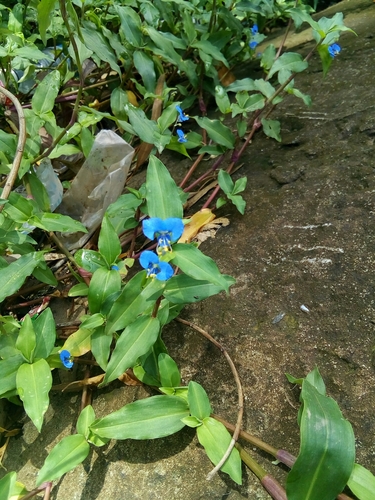
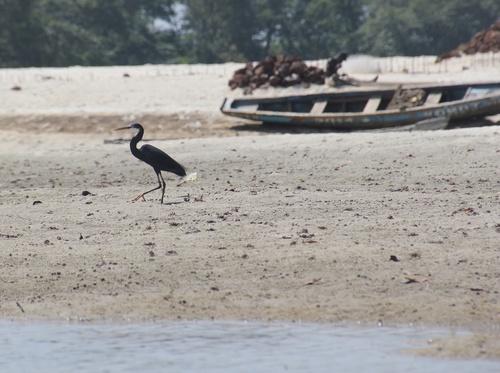
These photographs come from openly licensed iNaturalist observations located within the country. Identification reflects the observation record and can be corrected. A photograph is not evidence of a species’ current abundance or exclusive presence here. External images may load slowly or become unavailable; original source links remain available.
Explore more recorded wildlife and plant photographs
Explore UNESCO natural and mixed heritage sites by country · Watch nature documentaries
Which habitats near you face pressure from development, pollution, resource use or changing weather? Which local projects are protecting or restoring them? These questions invite local evidence; the gallery does not establish which pressures occur at each location.
For children and adults: What surprised you? What would you like to learn? Could this discovery open an interest in science, conservation, art or another way to contribute?
Suggest local nature resources or offer photographs with permission
What rights are protected in law here, and do women and girls experience those protections in daily life? Can they learn, work, participate in decisions and seek help without discrimination or coercion? What has improved, and what still needs attention?
These questions invite local evidence rather than assume the same barriers exist everywhere. Explore documented examples and practical changes · Find assistance starting points.
Are women and men paid equally for equal work or work of equal value? What explains differences in wages, benefits, pensions and promotion opportunities—and how can unfair treatment be challenged safely?
People in Sierra Leone belong in our shared discussion of wages, prices, care and the freedom to enjoy life. Local circumstances matter: a city worker, rural producer, unpaid carer or person unable to work may face different barriers.
The people who keep our shared house running
Ask a question about Sierra Leone · Explore assistance routes · Suggest dated local evidence
The linked article provides international examples and clearly labeled scenarios. This section asks local questions; it does not claim a verified wage or household budget for Sierra Leone.
Our countries and communities are rooms of one shared house, Earth. Introduce your part of Sierra Leone through your own experiences, pictures, creativity, and ideas.
Children deserve a meaningful voice here. Schools, libraries, and community leaders can invite their ideas about local life and explain what happens next. Children may notice simple possibilities adults have overlooked; their experiences deserve thoughtful consideration.
Explain your position and listen to others: constructive dialogue seeks understanding. Label personal accounts as your experience, support broader factual claims with sources, and protect people’s privacy. No contributor speaks for everyone in a country.
Share a story, creation, or constructive community idea for private review · Ways to give children a greater voice
You are welcome to answer any of these questions in your story. Choose only what you feel comfortable sharing; you do not need to disclose painful or private experiences.
Children’s contributions should be guided by a trusted adult, with appropriate permission and no private contact details. These are invitations for communities to develop opportunities; listing them does not mean a local forum already exists.
Know a talented child, adult, teacher, organization, or original performance video? We invite suggestions and authorized links from every country house. Help us show what is possible and how more children can receive opportunities to create.
The World Has Talent: invitation and organization directory
We also welcome carefully sourced animal encounters, interactions between species, and stories of rescue and care. Share the original source and context so we can review what the footage shows.
Animals, kindness, and unexpected connections · Contact our sharing team
Anyone may suggest an original link. Contributions remain private until approved; no listed organization is represented as an existing partner.
We warmly welcome help from people who are fluent in the languages used here. These AI-assisted translations may contain mistakes or miss cultural nuances. Your knowledge can help preserve the meaning, tone and intent of the message for readers around the world.
Please send us the page or document, quote the wording that needs attention, and suggest a correction with a brief explanation. A single correction is valuable. You can also volunteer to review more content and become part of our volunteer community team.
If you support Governing for Life’s purpose—improving the well-being of people and the living world—we also welcome volunteer moderators and community mediators. Moderators help apply the participation guidelines fairly. Mediators help keep communication polite and respectful, make room for different viewpoints, and avoid using their role to promote personal opinions. Supporting the purpose does not require agreement with every article or perspective.
Choose the kind of help and the time commitment that suits you. Together, people from different countries, languages and experiences can help this worldwide conversation grow.
Send a correction or express interest in joining the team · Explore volunteer team roles